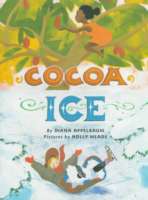
A girl in Santo Domingo tells how cocoa is harvested during the late 1800s while at the same time her counterpart in Maine tells about the harvesting of ice.

Materials from the Americas
A girl in Santo Domingo tells how cocoa is harvested during the late 1800s while at the same time her counterpart in Maine tells about the harvesting of ice.
The story describes the first time young Waira joins her parents on their trip from their mountain home to the market in Topojo. The journey normally takes two days, but in order to give Waira, and readers, a glimpse of Aymara history, the family takes a long detour to the ruins of the ancient city of Tiwanaku. They also stop near Lake Titicaca before finally arriving at the market. All of these events give Topooco the opportunity to describe some of the customs, history, lifestyle, and folklore of the people.
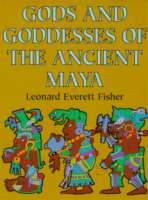
Gives the history of the principal gods and goddesses of the ancient Mayans, including Hunab Ku, Itzamna, Ix Tab, and Ah Puch.
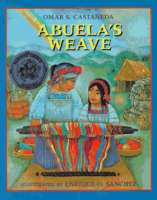
A Guatemalan story about intergenerational trust, love, and independence, this book introduces children to the culture of Guatemala through the story of a little girl selling her grandmother’s beautiful weaving at the public market. Illustrated throughout with paintings of authentic Guatemalan scenery, giving life to the country’s radiant landscape and bustling city streets.
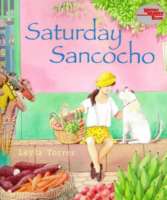
Maria Lili and her grandmother barter a dozen eggs at the market square to get the ingredients to cook their traditional Saturday chicken sancocho.
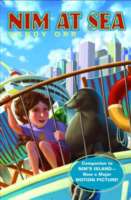
This time Nim’s the fish-out-of-water as she stows away on a cruise ship to save her kidnapped sea lion friend. Accompanied by her likeable iguana, Fred, the island girl lands with a splash in Manhattan, on the run from a very Bad Guy, and on her way to reunite with her friend, cowardly adventure novelist Alex Rover.
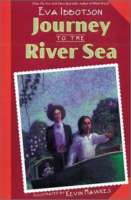
This hair-raising novel, set in turn-of-the-last-century Brazil, introduces Maia, an orphan, sent from England to live with unfamiliar cousins on a rubber plantation. As Maia and her kind governess arrive in their new home, they each have secret hopes of adventure–which are immediately quashed by the Carters, who hate their adopted land are obsessed with re-creating England in the forest, right down to the watery puddings.
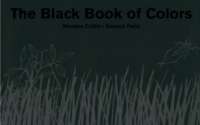
Living with the use of one’s eyes can make imagining blindness difficult, but this innovative title invites readers to imagine living without sight through remarkable illustrations done with raised lines and descriptions of colors based on imagery. Braille letters accompany the illustrations and a full Braille alphabet offers sighted readers help reading along with their fingers. This extraordinary title gives young readers the ability to experience the world in a new way.
See the review at WOW Review, Volume 3, Issue 1
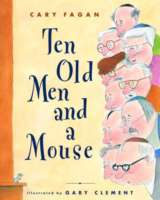
The synagogue was once a busy, bustling place, but now only ten old men come to tend it and pray each day. Then one day, a little scritch-scratch betrays the first new member in years: a tiny mouse who has taken up residence among the holy books. Of course, a trap must be set, but who will do it? Al volunteers, but in the morning the mouse is still there, and is just a little more appealing than he was before. Day after day, the men become more engaged, until the mouse has a bed, pictures on the wall, and a little carpet, not to mention all the treats the men bring. Then comes the biggest surprise of all. He is a she, giving the ten old men reason to celebrate with peach schnapps — and to plan a trip to the country where they find the perfect place to release their numerous charges. Back at the synagogue, fall turns to winter. The ten old men miss their mice until a little scritch-scratch returns.
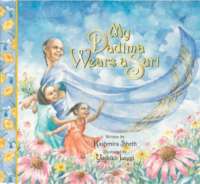
This warm, multigenerational story offers a glimpse into the distinctive culture and customs of India, while reinforcing universal themes of love and the importance of family. Every day, Rupa’s grandmother wears a beautiful sari. She shares with her young granddaughter all the wonderful things that saris can do-from becoming an umbrella in a rainstorm to providing a deep pouch to carry seashells collected from the beach. Soon Rupa’s own imagination is sparked with new uses for the saris. A note from the author and instructions for wrapping a sari are included.