
Some kids have one job: to be a kid! Cecilia has two. When she isn’t on the soccer field scoring goals, she’s accompanying her parents to all kinds of grown-up places, like the DMV, the accountant’s office, and the auto shop. She helps them translate from Spanish to English and from English to Spanish. It’s an important job, and it can even be fun. It’s also hard work. Sometimes Cecilia’s second job is so much responsibility, it feels like she’ll split in two! Is it time for Cecilia to blow her whistle and call for a time out?
Latinx in US
The Peanut Man
The story of a Cuban refugee and her joy in an unexpected encounter that connects her beloved home in Havana with her new home in Atlanta. Each evening Coqui waits for the familiar cry of the Peanut Man—”¡Mani! Peanuts!”—and watches for him to appear on the street below her window. They always greet each other in their own special way—Coqui tucks her thumbs in her ears and sticks out her tongue at Emilio. And Emilio, to her great amusement, does the same in return. Night after night, the two friends continue their ritual.
One evening, Coqui sadly announces, “Nos vamos.” She tells him that they have to leave Cuba. They are going to the United States. Emilio tries to assure her that she will like many things about los Estados Unidos, especially beisbol, her favorite sport. “But don’t forget your friend Emilio,” he says as he walks away. “¡Nunca!” she calls out through tears. She could never forget him.
Coqui and her family arrive in Decatur, Georgia, in the dead of winter to snow-covered ground. Her father seals the windows with duct tape and they await the arrival of spring. Coqui watches for the Peanut Man, but he does not appear. Several years pass, she learns wobbly English, and becomes a devoted Atlanta Braves fan. She forgets her beloved Peanut Man. Then one day her father surprises her with the perfect birthday gift—two tickets for a Braves game to see their favorite player Hammerin’ Hank Aaron. As they settle into their seats amid the cheering crowds, Coqui hears a man yelling “Peanuts! Get your peanuts!” The delicious smell of roasted peanuts reaches her and memories of home and Emilio rush into her head.
New Shoes For Leo
William’s Mami and his Tía Ana are busy packing a big box of food, medicine, and clothing to mail to their family living in Cuba. But something important is missing. They have no zapatos, no shoes, to send Cousin Leo!
Home
Love, comes a moving meditation on the places we feel most comfortable, loved, and protected, wherever that might be. Home is a tired lullaby and a late night traffic that mumbles in through a crack in your curtains. Home is the faint trumpet of a distant barge as your grandfather casts his line from the edge of his houseboat.
Home is featured in WOW Review Volume XVII, Issue 3.
Frizzy
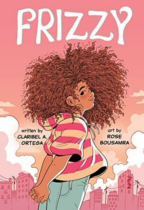
A middle grade graphic novel about Marlene, a young girl who stops straightening her hair and embraces her natural curls. Marlene loves three things: books, her cool Tía Ruby and hanging out with her best friend Camila. But according to her mother, Paola, the only thing she needs to focus on is school and “growing up.” That means straightening her hair every weekend so she could have “presentable”, “good hair”. But Marlene hates being in the salon and doesn’t understand why her curls are not considered pretty by those around her. With a few hiccups, a dash of embarrassment, and the much-needed help of Camila and Tia Ruby—she slowly starts a journey to learn to appreciate and proudly wear her curly hair.
Mariano’s First Glove/ El Primer Guante De Mariano (English And Spanish Edition)
“This bilingual picture book for kids recalls Major League Baseball pitcher Mariano Rivera’s childhood in Panama, his fascination with playing ball-even if he had to make his glove out of cardboard-and his eventual signing with the New York Yankees, where he helped win five World Series”–
Salsa Lullaby
“Parents put their young child to sleep with the help of some music and dancing”–
Grandma, Where Will Your Love Go? / Abuela, ¿adónde Irá Tu Amor? (Spanish Edition)

A grandmother assures her granddaughter that her love will always surround the young girl, even when she is no longer physically present.
Areli Is A Dreamer: A True Story By Areli Morales, A Daca Recipient
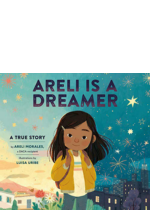
“In the first picture book written by a DACA dreamer Areli Morales tells her own powerful and vibrant immigration story of moving from a quiet town in Mexico to the bustling and noisy metropolis of New York City”–
Yenebi’s Drive To School

Yenebi, her sister Melanie, and mom drive to school every morning across the US-Mexico border.