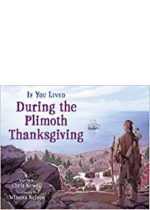
What if you lived in a different time and place? What would you wear? What would you eat? How would your daily life be different?
Scholastic’s If You Lived… series answers all of kids’ most important questions about events in American history. With a question and answer format, kid-friendly artwork, and engaging information, this series is the perfect partner for the classroom and for history-loving readers.
What if you lived when the English colonists and the Wampanoag people shared a feast at Plimoth? What would you have worn? What would you have eaten? What was the true story of the feast that we now know as the first Thanksgiving and how did it become a national holiday?
Chris Newell answers all these questions and more in this comprehensive dive into the feast at Plimoth and the history leading up to it. Carefully crafted to explore both sides of this historical event, this book is a great choice for Thanksgiving units, and for teaching children about this popular holiday.

United States
Materials from United States of America
Bluebird
In 1946 Eva arrives in New York City, from the rubble of Berlin, supposedly looking for a new life, but actually seeking justice against the Nazis that “escaped” with the help of the CIA; one in particular, the doctor who knows who Eva really is, because her identity is the product Project Bluebird, an experiment of the concentration camps involving brainwashing and mind control, which both the Americans and the Soviets would like access to–and Eva does not know if she can trust anyone she meets, least of all Jake Katz, the young man she is attracted to.
Reservations Required
Seventeen-year-old Lucy Sanchez’s world is turned upside down when her grandmother dies. Nana was instrumental in teaching her how to cook and encouraging her dream to become a chef. More importantly, her kitchen was a safe haven from the dysfunction at home. When Lucy becomes the target of her father’s physical abuse, she is forced to escape sooner than she’d planned. “I’m going to be a chef,” she keeps telling herself while on a bus headed to Los Angeles. Her life changes forever, though, when she sees a help-wanted sign in a restaurant window and impulsively gets off the bus in a small Arizona town. Lucy is thrilled to get the job, even though she’ll start as a dishwasher, working for room and board. When the owners of La Cocina discover her cooking skills, they promote her to assistant chef. Before long, word about her culinary talents begins to spread. But conflict with a jealous waitress and her sleazy boyfriend escalates as they harass Lucy at every opportunity. Is it too much to ask to cook, take classes at the local community college and get to know the cute guy she met there?
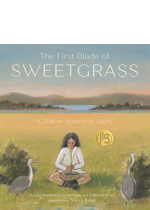
The First Blade Of Sweetgrass
Musquon must overcome her impatience while learning to distinguish sweetgrass from other salt marsh grasses, but slowly the spirit and peace of her surroundings speak to her, and she gathers sweetgrass as her ancestors have done for centuries, leaving the first blade she sees to grow for future generations. This sweet, authentic story from a Maliseet mother and her Passamaquoddy husband includes backmatter about traditional basket making and a Wabanaki glossary. color throughout
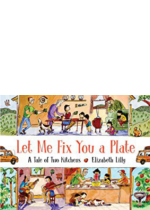
Let Me Fix You A Plate: A Tale Of Two Kitchens
Elizabeth Lilly’s tale of a joyous road trip, drawn from her own experience, is illustrated with quirky charm that captures all the warmth and love of her family’s two distinct cultures.
Featured in WOW Review, Volume XV, Issue 4.
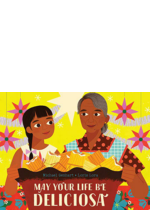
May Your Life Be Deliciosa
“What is the recipe?” I ask. Abuela laughs. “It is in my heart, Rosie. I use mis ojos, my eyes, to measure. Mis manos, my hands, to feel. Mi boca, my mouth, to taste. My abuela gave it to me, and I am giving it to you.” Each year on Christmas Eve, Rosie’s abuela, mamá, tía, sister, and cousins all gather together in Abuela’s kitchen to make tamales—cleaning corn husks, chopping onions and garlic, roasting chilis, kneading cornmeal dough, seasoning the filling, and folding it all—and tell stories. Rosie learns from her abuela not only how to make a delicious tamale, but how to make a delicious life, one filled with love, plenty of spice, and family.
La Llorona Can’t Scare Me / La Llorona No Me Asusta
“Little Damian is getting ready for bed, and the spooky monster called La Llorona is hollering up a storm outside his bedroom window. But he’s not afraid. “You can’t scare me, silly Llorona,” says Damian, “and neither can your monster friends!” When evil-looking witch owls fly around his room and little green duendes, or goblins, make creepy noises under his bed, he’s still not frightened. Not even a little bit. The Donkey Lady, a chupacabras and even some little devils parade through his room, but Damian still isn’t afraid. A witch casting spells, a ghost rattling its chains, a cucuy with a burlap bag to catch him … nada. None of them can terrify brave little Damian. How can a little boy like him be so fearless?!? No one knows it, but Damian has a secret weapon: a night light shaped like a mighty wrestler wearing a silver mask. When he plugs it in, its bright light terrifies all the monsters and sends them running for a place to hide!
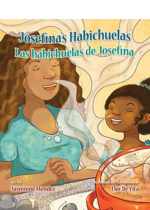
Josefina’s Habichuelas / Las Habichuelas De Josefina (Multilingual Edition)
Like all kids, Josefina loves to eat sweets. She loves warm chocolate chip cookies right out of the oven, cupcakes and candy! One night, while eating a piece of flan, Mami asks her to consider giving up sweets for Lent, the 40 days leading up to Easter. “That’s impossible!” Josefina says. When Mami promises to teach her how to make her favorite dessert, habichuelas con dulce, she agrees to give it a try. Josefina can’t wait to end her fast and eat the delicious sweet cream beans, her family’s traditional Easter dessert. While she and her mom, tias and abuela prepare the dish, they dance to merengue music and tell stories about life back in the Dominican Republic. The kitchen fills with the aromatic smells of cinnamon and sugar, but it’s the feelings of love and happiness Josefina will never forget. On Easter, when the family eats her special dessert, the girl’s grandmother says it’s the best she has ever tasted
My Magic Wand: Growing With The Seasons
From bestselling Latina author Pat Mora comes a collection of poems celebrating a young child’s growth and everyday experiences throughout the seasons of a year.
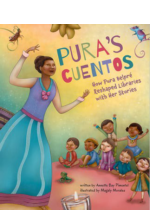
Pura’s Cuentos: How Pura Belpré Reshaped Libraries With Her Stories
Pura’s abuela always has a cuento to share. She crows ¡Qui-qui-ri-quí! for Señor Gallo, booms Borom, Borom for Señor Zapo, and tells of a beautiful cockroach who loves a mouse. Pura clings to these stories like coquíes cling to green leaves.
When Pura grows up and moves from Puerto Rico to Harlem, she gets a job at the library, where she is surrounded by stories—but they’re only in English. Where is Señor Gallo? Where is Pérez the mouse? Where is Puerto Rico on these shelves? She decides to tell children the tales of her homeland in English and in Spanish.