
There are many kinds of friends and friendships, and all are explored in this volume.

Materials from Europe
There are many kinds of friends and friendships, and all are explored in this volume.
 As a teenage Jewish girl struggles with anorexia, her decisions about whether or not to live affect those close to her and are influenced by survivors of the Holocaust.
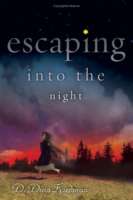
Thirteen-year-old Halina Rudowski narrowly escapes the Polish ghetto and flees to the forest, where she is taken in by an encampment of Jews trying to survive World War II. Based on historical events, this gripping tale sheds light on a little-known aspect of the Holocaust: the underground forest encampments that saved several thousand Jews from the Nazis.
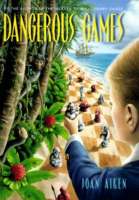
This eagerly awaited addition to Joan Aiken’s award-winning Wolves series takes us on Dido’s most imaginative adventure yet! Dido Twite has been sailing the high seas, chasing after Lord Herodsfoot, who is scouring the globe for new and interesting games. Now he’s needed back in London, in the hope that his games will help King James, who is lying ill and wretched with a mysterious disease no doctor can cure. Dido’s search has taken her to Aratu, a mysterious spice island where foreigners seldom venture–maybe because of the deadly pearl snakes and sting monkeys there. When Dido lands at Aratu, she realizes that there is something even more dangerous than poisonous snakes on the island. She soon makes friends among the Forest People and learns of a plot to overthrow the island’s king, who lives–deaf and sick–at his palace on the Cliffs of Death. Will Dido and her friends be able to reach him in time?
Although he is afraid of Andrew Aldie, twelve-year-old Chris Cooper agrees to help his friend Finn Lochlan look for a way to stop Andrew’s father from opening a gravel pit near their Scottish village.
Fifteen-year-old James, a championship diver, finds himself torn between his dreams of Olympic glory, his love for his adoptive parents, and his desperate need to find his birth mother.

Fifteen-year-old Luke is a skilled thief with a perfect record until the day he is caught running from a robbery gone wrong. He chooses to save the life of a blind girl, Jodi, rather than escape cleanly. As a result, Luke is given a shot at freedom if he will train to be Jodi’s guide in the London Marathon. The friendship that develops between the two offers Luke one last chance to discover just how far-and in what direction-he is willing to run. A taut, unpredictable read, this novel will appeal to anyone who has changed course in life . . . or is trying to figure out how.
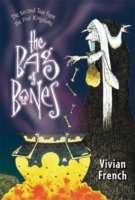
The good witches of Wadingburn are worried – there’s a new witch in town with a bag of magic bones, and she’s so evil she makes their toes ache…This is another fun-filled fantasy in the “Tales from the Five Kingdoms” stories that started with “The Robe of Skulls”.Truda Hangnail is a very wicked witch, banned from the Five Kingdoms because of her use of deep magic. Then she comes up with a fiendish plan to restore evil to the Five Kingdoms, transforming the good witches of Waddingburn into shrivelled, wicked old witches who will help her take over King Frank’s kingdom on his fiftieth birthday. Luckily, a sweet-natured half-human, half-elf named Loobly is witness to Truda’s evil spell and sets off to fetch help. As the birthday party looms and Truda’s evil gathers strength, Loobly enlists the help of Prince Marcus of Gorebreath and Gracie Gillypot, as well as old friends Gubble the troll and Marlon and Alf the bats, to stop Truda and send her packing to the house of the Ancient Crones to face her just deserts.
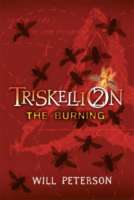
As twins Rachel and Adam are pursued across Europe by terrifying forces, they realize they can trust no one — and must draw on their special powers to survive. After the shocking revelations in Triskellion, being guests of the “Hope Project” might seem like a relief. But Rachel and Adam soon figure out that they’re being held prisoner, and that the program has more sinister goals than archaeological research in mind. A hideous discovery at the funeral of their grandmother makes it clear that the teenagers must flee from England to Paris, Seville, and finally Morocco, evading not only their former benefactors but also the followers of “The Englishman,” a zombie-like figure with a frightening agenda of his own. It will take all of their special abilities and courage to stay alive until their journey reaches an explosive climax — and they unearth, on the North African coast, an ancient secret even more startling than the first.
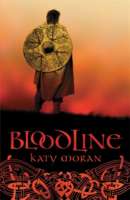
Warring kingdoms, bloody feuds, and a boy’s battle for survival. Step back into the Dark Ages with this riveting epic adventure.In the wilds of Dark Age Britain, a bard abandons his son, Essa, in a village trapped between two feuding kingdoms. As the once-nomadic boy grows rooted in the life of the Wolf Folk, forging allegiances and young love, King Penda of Mercia threatens to attack, thrusting Essa into the violent and cunning world of the tribal rulers. Joined by unlikely friends, unsure of whom to trust — or even of who he is — Essa sets off on a dangerous journey, using his newfound intuitive gifts to guide them as a deadly battle brews. Will his desperate efforts to save his loved ones bring him closer to understanding why his father has never returned?