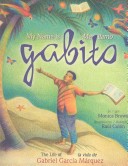
Gabriel Garcia Marquez is perhaps one of the most brilliant writers of our time. He is a tremendous figure, enormously talented, and unabashedly admired. This is his story, lovingly told, for children to enjoy. Using the imagery from his novels, Monica Brown traces the novelist’s life in this creative nonfiction picture book from his childhood in Colombia to today. This is an inspiring story about an inspiring life, full of imagination and beauty.
Latin America
Materials from South America
Ana’s Story: A Journey Of Hope
Ana’s story begins the day she is born with HIV, transmitted from her mother, who dies just a few years later. From then on, Ana’s childhood becomes a blur of secrets—about her illness, her family, and the abuse she endures. Shuffled from home to home, Ana rarely finds safety or acceptance. But after she falls in love and becomes pregnant at seventeen, she embarks on a journey that leads her to new beginnings, new sorrows, and new hope. Based on her work with UNICEF and inspired by the framework of one girl’s life, Jenna Bush tells the story of many children around the world who are excluded from basic care, support, and education. Resources at the back of this book share how you can help children like Ana and protect yourself and others.
So Loud a Silence
Accustomed to his impoverished life in Bogota, Colombia, Juan Guillermo resents his family and is delighted when a visit to his wealthy grandmother introduces him to the comforts of money, but he learns a savage truth that puts his family in danger.
Amazon Basin: Vanishing Cultures
This photo-essay by Jan Reynolds offers a rare glimpse into the life of the Yanomama of the Amazon Basin.The award-winning Vanishing Cultures seven-book series, now available again in beautiful, updated editions. Features photographic accounts of children from indigenous cultures around the world to explore their daily lives, relationships with their environments, and challenges in a changing world.
Abuela’s Weave
A Guatemalan story about intergenerational trust, love, and independence, this book introduces children to the culture of Guatemala through the story of a little girl selling her grandmother’s beautiful weaving at the public market. Illustrated throughout with paintings of authentic Guatemalan scenery, giving life to the country’s radiant landscape and bustling city streets.
Chaska and the Golden Doll
Chaska wishes that she could learn to read and write, but the schoolhouse in her little village in the Andes Mountains is too small, and only the boys and older girls can attend. So she spends her days with Grandfather, who tells her stories about the proud Incas and their gold. Many years ago, the Incas lived in the same valley as Chaska’s village and made golden objects in honor of the Sun God, Papa Inti. A few still lie buried among the rocks and stones. One day, as Chaska is thinking about these stories, she finds a golden doll–real Inca idol.
Sawdust Carpets
The Lau family travels to Antigua, Guatemala to visit their cousins. Although the Laus are Chinese and Buddhist, they adore the pageantry of Easter, and Easter in Antigua is exciting, with long, elaborate processions of penitents wreathed in incense and carrying colonial Spanish statues down the cobblestone streets of the city. The best part is seeing the elaborate carpets made of colored sawdust, which the processions walk over and destroy. On the morning of the most important procession, the heroine is invited to make her very own sawdust carpet. But why, she wonders, make something so beautiful, only to have it be ruined? Guatemalan and Chinese religious observances, dragon boat races and Easter processions, piñatas, baptisms, and Chinese tamales all weave in and out of this story, which celebrates beauty, religious celebration, and tolerance.
The Remembering Stone
A surprising journey of self-discover. In early fall, the blackbirds creak like rusty wheels behind our apartment. “One day I will return like you,” my mother tells the birds. “But for now, you go. Que les vaya bien. Safe journey.” Ana doesn’t understand the pull of this faraway place until one night she puts her favorite thing, a stone spit from the volcanoes of Costa Rica, underneath her pillow. She imagines herself a blackbird flying to this country her mother longs to see again. This evocative picture book with its striking, bold art celebrates the importance of hope, dreams, and cultural roots, and will have special resonance for all thos who find themselves at the crossroads of two cultures.
My Mama’s Little Ranch on the Pampas
This story about ranch life on the Argentinean pampas is told in the voice of young Maria Cristina, who describes the activities as the seasons change. Mama buys the ranch during a hot and steamy January. The children go back to school in March, and during the cold and rainy July winter vacations, most of the calves are born. Finally, on a very hot Christmas Eve, a special gift arrives. The story, based on the author’s childhood, challenges stereotypes of this culture by depicting a woman as the buyer and owner of the ranch.
Grannie Jus’ Come
Grannie Jus’ Come! joins a host of Caribbean children’s books, but unlike the rest–which are mostly song books, poetry books, and counting books–this book offers a rich narrative about a young girl and her loving relationship with her grandmother.