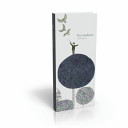
The Conductor

Pairing two seemingly disparate elements, an orchestra conductor and a grove of trees, award-winning artist Laetitia Devernay herself orchestrates a visual magnum opus. Her spare, yet intricate, illustrations truly appear to take flight before our eyes and her wordless narrative nearly roars with sound as the conductor prompts the leaves to rustle, then whirl, then swirl to unexpected life with each turn of the page. It is a celebration of creativity, imagination, storytelling, and the renewing power of nature that will entrance readers of every age.

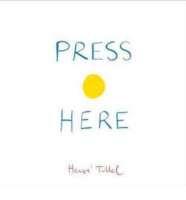
Press Here

Press the yellow dot on the cover of this book, follow the instructions within, and embark upon a magical journey! Each page of this surprising book instructs the reader to press the dots, shake the pages, tilt the book, and who knows what will happen next! Children and adults alike will giggle with delight as the dots multiply, change direction, and grow in size! Especially remarkable because the adventure occurs on the flat surface of the simple, printed page, this unique picture book about the power of imagination and interactivity will provide read-aloud fun for all ages!

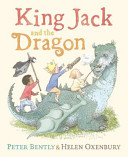
King Jack and the Dragon

Jack, Zack, and Caspar build a castle fort, then spend a day fighting dragons and beasts, but at day’s end giants carry away first Sir Zack, then Caspar, and King Jack is left to face night creatures alone.

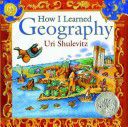
How I Learned Geography

A 2009 Caldecott Honor Book. Having fled from war in their troubled homeland, a boy and his family are living in poverty in a strange country. Food is scarce, so when the boy’s father brings home a map instead of bread for supper, at first the boy is furious. But when the map is hung on the wall, it floods their cheerless room with color. As the boy studies its every detail, he is transported to exotic places without ever leaving the room, and he eventually comes to realize that the map feeds him in a way that bread never could. Based on the artist’s childhood memories of World War II.

No Pets Allowed

When Matthew moves to Vancouver with his mother, he’s not able to bring along his dog Lucky, because the apartment building he is moving into does not allow dogs. But when Matthew’s imaginary dog scares off a burglar, all the tenants argue that Lucky should be allowed to come live there.

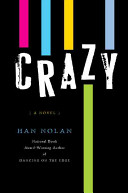
Crazy

Fifteen-year-old Jason has fallen upon bad times: his mother has died and his father has succumbed to mental illness. As he tries to hold his crazy father and their crumbling home together, Jason relies on a host of imaginary friends for guidance as he stumbles along trying not to draw attention to his father’s deteriorating condition. Both heartbreaking and funny, CRAZY lives up to the intense and compelling characters Han Nolan is praised for. As Jason himself teeters on the edge of insanity, Nolan uncovers the clever coping system he develops for himself and throws him a lifeline in the guise of friendship.

J. R. R. Tolkien

John Ronald Reuel Tolkien’s novels were strongly influenced by his childhood both in South Africa, where lions prowled and wild beasts roamed, and in the English countryside, where he imagined that elves and gnomes dwelled. J. R. R. Tolkien wrote many stories, studied languages–even inventing one of his own–and founght bravely in World War I. He wrote The Hobbit, a children’s book about a courageous creature with pointed ears and furry feet, which was an instant success. His next book, The Lord of the Rings, made Tolkien, an ordinary man with an extraordinary imagination, one of the world’s most beloved authors.

A Daisy Is a Daisy Is a Daisy (Except When It’s a Girl’s Name)

Many girls are named after flowers (or even forms of the word “flower,” such as Flora). Girls’ names in different languages accompany her imaginative illustrations of flowers, so that the reader discovers, for example, that Gul means rose in Turkish, but that it is Rosa in Spanish and Rodanthe in Greek. Flowers named in the book include rose, heather, buttercup, sunflower, lily of the valley, daisy, bluebell, snowdrop, hyacinth, myrtle, camomile, cherry blossom, jasmine, violet, tulip, poppy. This can be used in the classroom to talk about culture, language and botany.

Broucci

broucciBroučci is a classic children’s book by Jan Karafiát published in the Czech language in the early 1870s. The title is the Czech word for beetles, and the word is also used for “traditional Czech figures of fairylike insect people”[2] such as the characters in the book. In English, the title is often translated as Fireflies.