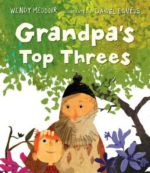
Grandpa’s Top Threes

Henry loves talking with Grandpa, but Grandpa has stopped listening. Mom says to just give him time. But Henry wants to talk to Grandpa now. So Henry tries his favorite game: Top Threes. And something amazing happens: Grandpa starts talking again. Out of a tale of favorite sandwiches and zoo animals, outings and trains, emerges a moving story about love, loss, and the wonder of grannies and grandpas.
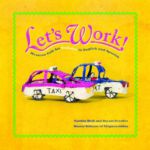

Let’s Work

Cynthia Weill scores again with an early concept book that bring every kind of job to life, including the work of the dedicated palm weavers of Flavio Gallardo’s workshop, whose miniature palm weavings illustrate this playful book, teaching children words for work in two languages. The weavers live in the village of Chigmecatitlán in the Mixteca part of the Mexican state of Puebla. With tremendous skill and patience, the artisans of this region practice palm weaving, a craft which came to Mexico even before the arrival of the Spanish in the early 15th century. Imagine being able to hold all of the illustrations in one book in the palms of your hands. You can do that with the tiny weavings in Let’s Work. Most pieces are no larger than a dime!

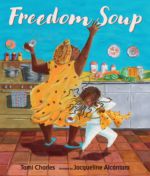
Freedom Soup

Every year, Haitians all over the world ring in the new year by eating a special soup, a tradition dating back to the Haitian Revolution. This year, Ti Gran is teaching Belle how to make the soup — Freedom Soup — just like she was taught when she was a little girl. Together, they dance and clap as they prepare the holiday feast, and Ti Gran tells Belle about the history of the soup, the history of Belle’s family, and the history of Haiti, where Belle’s family is from. In this celebration of cultural traditions passed from one generation to the next, Jacqueline Alcántara’s lush illustrations bring to life both Belle’s story and the story of the Haitian Revolution. Tami Charles’s lyrical text, as accessible as it is sensory, makes for a tale that readers will enjoy to the last drop.

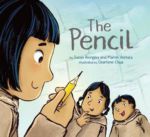
The Pencil

Susan and her sister, Rebecca, love watching their mother write letters to people in other camps. Their mother has one precious pencil, and she keeps it safe in her box for special things. One afternoon, their mother leaves the iglu to help a neighbour, and Susan, Rebecca, and their brother Peter are left with their father. They play all their regular games but are soon out of things to do―until their father brings out the pencil! As Susan draws and draws, the pencil grows shorter and shorter. What will their mother think when she comes home? Based on author Susan Avingaq’s childhood memories of growing up in an iglu, this charming story introduces young readers to the idea of using things wisely.

Us, in Progress: Short Stories About Young Latinos

Acclaimed author and Pura Belpré Award honoree Lulu Delacre’s beautifully illustrated collection of twelve short stories is a groundbreaking look at the diverse Latinos who live in the United States. In this book, you will meet many young Latinos living in the United States, from a young girl whose day at her father’s burrito truck surprises her to two sisters working together to change the older sister’s immigration status, and more. Turn the pages to experience life through the eyes of these boys and girls whose families originally hail from many different countries; see their hardships, celebrate their victories, and come away with a better understanding of what it means to be Latino in the U.S. today.

Marcus Vega Doesn’t Speak Spanish

After a fight at school leaves Marcus facing suspension, Marcus’s mother takes him and his younger brother, who has Down syndrome, to Puerto Rico to visit relatives they do not remember or have never met, and while there Marcus starts searching for his father, who left their family ten years ago and is somewhere on the island.

This book has been included in WOW’s Language and Learning: Children’s and Young Adult Fiction Booklist. For our current list, visit our Booklist page under Resources in the green navigation bar.