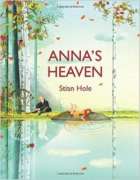
After the death of her mother, Anna and her father imagine that Heaven might be a place where one can help in God’s garden, visit with old friends, and take off one’s socks whenever one pleases.

After the death of her mother, Anna and her father imagine that Heaven might be a place where one can help in God’s garden, visit with old friends, and take off one’s socks whenever one pleases.
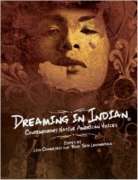
A powerful and visually stunning anthology from some of the most groundbreaking Native artists working in North America today. Truly universal in its themes, Dreaming In Indian will shatter commonly held stereotypes and challenge readers to rethink their own place in the world.
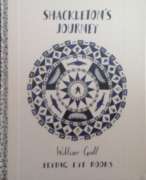
William Grill weaves a detailed visual narrative of Shackleton’s journey to Antarctica. Grill’s beautiful use of colored pencils and vibrant hues effortlessly evokes the adventure and excitement that surrounded the expedition. His impeccably researched drawings, rich with detail, fastidiously reproduce the minutiae of the expedition.
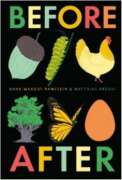
“Everyone knows that a tiny acorn grows into a mighty oak and a caterpillar becomes a butterfly. But in this clever, visually enchanting volume, it’s also true that a cow can result in both a bottle of milk and a painting of a cow, and an ape in a jungle may become an urban King Kong. Just as day turns into night and back again, a many-tiered cake is both created and eaten down to a single piece. With simple, graphic illustrations sure to appeal to even the youngest of children, this beautiful rumination on the passage of time will please the most discerning adult readers, too.”
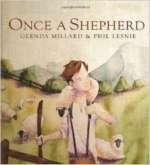
Here is the tale of Tom Shepherd, tending his lambs and shearing their fleece and wooing his sweetheart, who weaves the sheep’s wool to make him a coat. But then the Great War comes, and Tom must leave his beloved wife and his unborn child and go off to fight.
Featured in WOW Review Volume X, Issue 2.
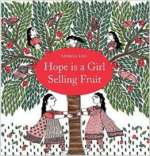
On a train journey to a large city, a young woman notices a very poor girl. Who is she? Where is she going? What does her future hold? Hope Is a Girl Selling Fruit is a gentle, reflective account of a young woman’s thoughts and feelings as she comes into contact with the larger world. The rich imagery takes the story into another realm, inviting the reader to interpret it at many levels. Young Indian artist Amrita Das pushes the boundaries of her traditional art to radical new ends as she muses on women’s mobility, class, and choices.
See the review at WOW Review, Volume 8, Issue 3
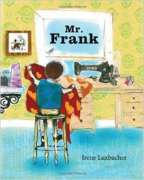
On his last day before retirement, Mr. Frank is sewing the most wonderful outfit of his long career. In all his years working as a tailor, Mr. Frank has made all kinds of clothes. From the practical uniforms of the 1940s to the wild and weird designs of the 1960s and 1970s, he has seen (and sewn) just about everything. But today’s project is especially close to Mr. Frank’s heart.
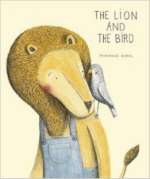
A lion finds a wounded bird in his garden and decides to care for it through the winter. When spring arrives, the bird’s flock returns. The bird goes off with its flock. Lion is sad. But autumn brings a wonderful surprise.
See the review at WOW Review, Volume VIII, Issue 1.
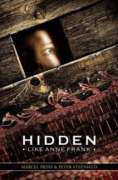
Fourteen unforgettable true stories of children hidden away during World War II. Jaap Sitters was only eight years old when his mother cut the yellow stars off his clothes and sent him, alone, on a fifteen-mile walk to hide with relatives. It was a terrifying night, one he would never forget. Before the end of the war, Jaap would hide in secret rooms and behind walls. He would suffer from hunger, sickness, and the looming threat of Nazi raids. But he would live. This is just one of the incredible stories told in HIDDEN LIKE ANNE FRANK, a collection of eye-opening first-person accounts that share what it was like to go into hiding during World War II. Some children were only three or four years old when they were hidden; some were teenagers. Some hid with neighbors or family, while many were with complete strangers. But all know the pain of losing their homes, their families, even their own names. They describe the secret network of brave people who kept them safe. And they share the coincidences and close escapes that made all the difference.
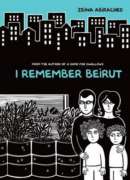
Zeina Abirached grew up in Beirut in the 1980s as fighting between Christians and Muslims divided the city streets. With striking black-and-white artwork, Abirached recalls the details of ordinary life inside a war zone.