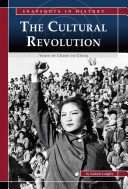
The Cultural Revolution

On August 18, 1966, more than 1 million young people marched into the center of Beijing. They had come to answer the call of the country’s leader, Chairman Mao Tse-tung. Mao had just launched the Cultural Revolution in China, an attack on anyone who seemed to be betraying communist ideals. The young people who came to Beijing carried Maos violent message throughout the land. During the next three years, the Cultural Revolution brought chaos and bloodshed all around China.


Mongolia (Culture of the World)

This book provides comprehensive information on the geography, history, wildlife, governmental structure, economy, cultural diversity, peoples, religion, and culture of Mongolia.

Secrets of a Civil War Submarine: Solving the Mysteries of the H. L. Hunley

On February 17, 1864, the H.L. Hunley made history as the first submarine to sink a ship in battle. Soldiers on the shore waited patiently after seeing the submarine’s return signal. But after several days, the ship had failed to return. What had gone wrong? In 1995, after over 130 years of searching, the H.L. Hunley was finally found buried off the coast of South Carolina.

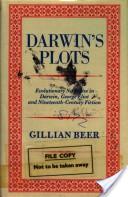
Darwin’s Plots: Evolutionary Narrative In Darwin, George Eliot And Nineteenth-Century Fiction

Gillian Beer’s classic Darwin’s Plots, one of the most influential works of literary criticism and cultural history of the last quarter century, is here reissued in an updated edition to coincide with the anniversary of Darwin’s birth and of the publication of The Origin of Species. Its focus on how writers, including George Eliot, Charles Kingsley and Thomas Hardy, responded to Darwin’s discoveries and to his innovations in scientific language continues to open up new approaches to Darwin’s thought and to its effects in the culture of his contemporaries. This third edition includes an important new essay that investigates Darwin’s concern with consciousness across all forms of organic life. It demonstrates how this fascination persisted throughout his career and affected his methods and discoveries. With an updated bibliography reflecting recent work in the field, this book will retain its place at the heart of Victorian studies.

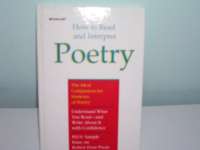
How To Read and Interpret Poetry

The Ideal companion for students of poetry. Understand what you read and write about it with confidence plus: sample essay on Robert Frost Poem. The basics of reading poetry with fully explained poems an in depth discussion of all current types of criticism followed by a poem and sample critical responses. A sample poem in drafts to illustrate the poetic process. A helpful glossary of terms. A bibliography for further reading.

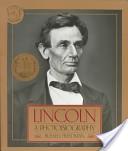
Lincoln: A Photobiography (Houghton Mifflin Social Studies)

A description of the boyhood, marriage, and young professional life of Abraham Lincoln includes his presidential years and also reflects on the latest scholarly thoughts about our Civil War president.

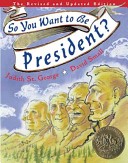
So You Want To Be President? (Revised And Updated Edition)

This new version of the Caldecott-winning classic by illustrator David Small and author Judith St. George is updated with current facts and new illustrations to include our forty-second president, George W. Bush.

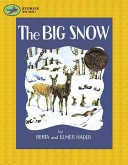
The Big Snow (Stories To Go!)

The woodland animals were all getting ready for the winter. Geese flew south, rabbits and deer grew thick warm coats, and the raccoons and chipmunks lay down for a long winter nap. Come Christmastime, the wise owls were the first to see the rainbow around the moon. It was a sure sign that the big snow was on its way.

Black Potatoes: The Story Of The Great Irish Famine, 1845-1850

In 1845, a disaster struck Ireland. Overnight, a mysterious blight attacked the potato crops, turning the potatoes black and destroying the only real food of nearly six million people. Over the next five years, the blight attacked again and again. These years are known today as the Great Irish Famine, a time when one million people died from starvation and disease and two million more fled their homeland. Black Potatoes is the compelling story of men, women, and children who defied landlords and searched empty fields for scraps of harvested vegetables and edible weeds to eat, who walked several miles each day to hard-labor jobs for meager wages and to reach soup kitchens, and who committed crimes just to be sent to jail, where they were assured of a meal. It”s the story of children and adults who suffered from starvation, disease, and the loss of family and friends, as well as those who died. Illustrated with black and white engravings, it”s also the story of the heroes among the Irish people and how they held on to hope.