We Won’t Back Down: Severita Lara’s Rise From Student Leader To Mayor (Hispanic Civil Rights)

An enlightening biography for young adults of a little-known female activist in the Hispanic Civil Rights Movement On December 9, 1969, change was in the air. The small town of Crystal City, Texas would never be the same. After weeks of petitioning for a hearing with the Crystal City school board, students of Crystal City High and their parents descended on the superintendent’s office. The students had been threatened with suspension and even physical violence. Powerful members of the community had insisted they would fire the parents of students if they went in front of the school board, and still, they came. Finally, the school board removed the chairs in the gallery, and the parents and students stood until members of the school board fled to avoid the confrontation. As the students and their parents stood in front of the building, a cry rose from the crowd. “Walk out. Walk out.” So began the Crystal City High student walk out. At the center of the fervor was Severita Lara. Called la cabezuda, or stubborn girl, by her mother, Lara bore the mark of a leader from an early age. She was not afraid to stand up to anyone: girls or boys, teachers or superintendents. She always followed her father’s advice, “If you know it’s right, do it.” José Angel Gutiérrez, the famous civil rights leader, chronicle’s Lara’s ascent from a willful child to the mayor of Crystal City. From her father’s doting support to her mother’s steel-rod discipline, Gutiérrez offers a detailed portrait of the early family life of the woman whose continuing struggle against segregation and discrimination began while she was still a high school student in Crystal City. He also follows her attempts as a single mother to achieve her dream of being a doctor and providing for her sons. This is the story of la cabezuda, Severita Lara, who has made an indelible imprint on American history.
Call Me Henri

Enrique, a young boy in Peralta Middle School, faces abuse at home and danger on the barrio streets. Yet he is driven to succeed by the desire to join that “other America” he sees on TV and in the movies, and is aided in his quest by compassionate teachers. His ambition finds expression in his determination to drop his ESL class in favor of taking French, and his story begins, “Call me Henr.”

Lorraine Lpez (author of Soy la Avon Lady and Other Stories) has created a vivid picture of barrio life, filled with honesty, insight, and humor for young adults. She paints a balanced and detailed landscape of Enrique’s world. Although Enrique is confused and angered by his mother’s refusal to stand up for him against the abuse of his stepfather, he also draws strength from the supportive and loving family of his friend Francisco. While some of his teachers are uncaring or inept, others provide help and encouragement at critical moments in his life.

When Enrique witnesses his friend Horacio gunned down in a drive-by shooting and is seen by the assailants, gang members set out to kill him. As the novel reaches its climax, Enrique must make some agonizing decisions.

Although specifically about barrio life, this novel is universal in its themes-the drive for success, the desire for love and family support, and the need for true friendship. Lpez’s fully delineated characters provide a rich and credible mural of our human comedy.

Lorraine Lpez‘s Soy la Avon Lady and Other Stories was selected for the Marmal Prize, and also won the IPPY Award for Multicultural Fiction.

¿de Veras?

For one month each year, the National Hispanic Cultural Center in Albuquerque brings together New Mexico teens for a creative writing program that immerses them in a process of reflection and creativity while encouraging them to explore their identity as people, as a culture, as a region, and as a society. These students unite their varied experiences, backgrounds, and beliefs to form a supportive community of respect through conversation and writing.¿de Veras? (really?) features a collection of poems, essays, and stories written in the Voces program between 2002 and 2006 that represent the diversity of perspectives and individuality of voices of the young creators. These writings reflect the authors’ courage to examine their lives, their neighborhoods, their families, and their cultures. What emerges is their amazingly perceptive, sometimes damning, yet always-honest insights.

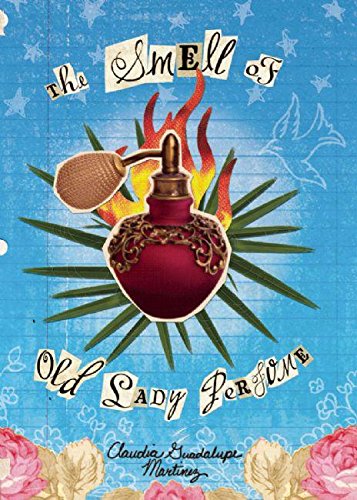
The Smell Of Old Lady Perfume

Claudia Guadalupe Martinez’s debut novel for young adults is a bittersweet story about death, family, and the resilient emotional strength of the human heart. Chela Gonzalez, the book’s narrator, is a nerd and a soccer player who can barely contain her excitement about starting the sixth grade. But nothing is as she imagined-her best friend turns on her to join the popular girls and they all act like Chela doesn’t exist. She buries herself in schoolwork and in the warm comfort of her family. To Chela, her family is like a solar system, with her father the sun and her mother, brothers, and sister like planets rotating all around him. It’s a small world, but it’s the only one she fits in.But that universe is threatened when her strong father has a stroke. Chela’s grandmother moves in to help the family. The smell of her old lady perfume invades the house. That smell is worse than Sundays. Sundays were sad, but they went just as sure as they came. Death was a whole other thing, and Chela doesn’t understand that’s what everyone is waiting for. In her grief and worry, Chela begins to discover herself and find her own strength.Claudia Guadalupe Martinez was born in El Paso, Texas. She learned that letters form words from reading the subtitles of old Westerns for her father. She went on to graduate from college and moved to Chicago to become one of the city’s youngest nonprofit executives.

Probably the World’s Best Story about a Dog and the Girl Who Loved Me

The further adventures and misadventures of twelve-year-old Paolo, his six-year-old brother Georgie, and their nine-year-old deaf cousin Billy as they try to find their missing dog, cope with a new paper route, and discover romance in their small California town in 1951.


Behind The Eyes

behindHector Robles has spent his sixteen years in the projects of El Paso trying to stay unnoticed. His peaceful obscurity is shattered when his impulsive brother challenges the leader of a gang called the Discípulos. Suddenly Hector is drawn into their world of violence and hopelessness. When a marker is placed on his life, Hector tries to escape by going away to a school for students with troubled pasts. But it isn’t easy to function when he’s paralyzed by the fear that they’ll find him, even there. Ultimately, by confronting external threats and the internal pain of his memories and mistakes, Hector begins to understand what manhood really means.

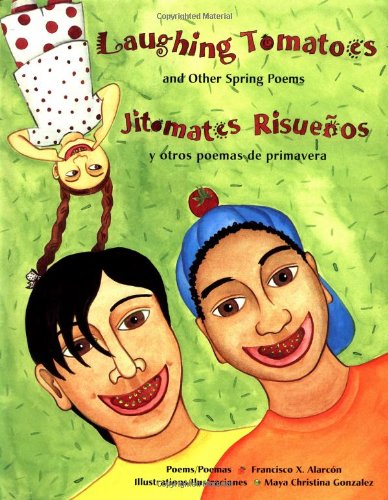
Laughing Tomatoes And Other Spring Poems / Jitomates Risuenos Y Otros Poemas De Primavera

Tomatoes laugh, chiles explode, and tortillas applaud the sun in this playful and moving collection of twenty English and Spanish poems written in honor of the wonders of life and nature.

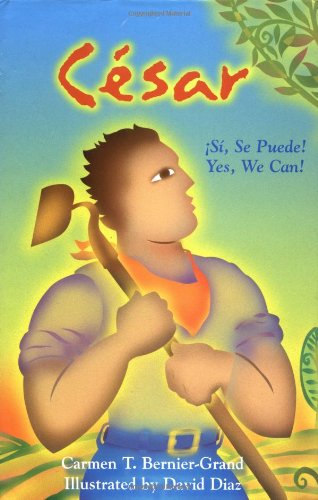
Ce´sar

cesarBorn in 1927 in Yuma, Arizona, César Chavez lived the hard-scrabble life of a migrant worker during the depression. He grew to be a charismatic leader and founded the National Farm Workers Association, an organization that fought for basic rights for his fellow farm workers. In powerful poems and dramatic stylized illustrations, Carmen T. Bernier-Grand and David Díaz pay tribute to his life and legacy.

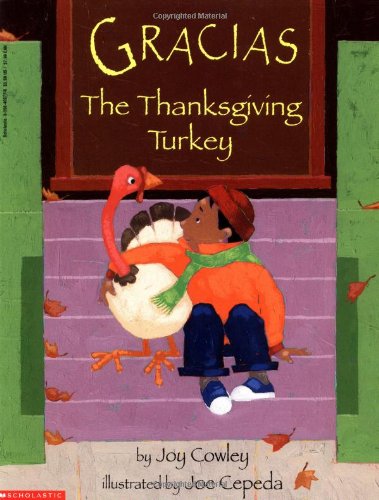
Gracias The Thanksgiving Turkey

In this warm holiday story, a young Puerto Rican boy saves the life of his pet turkey with help from his close-knit New York City family and neighborhood. Beginning Spanish vocabulary is woven into the text. Four color.

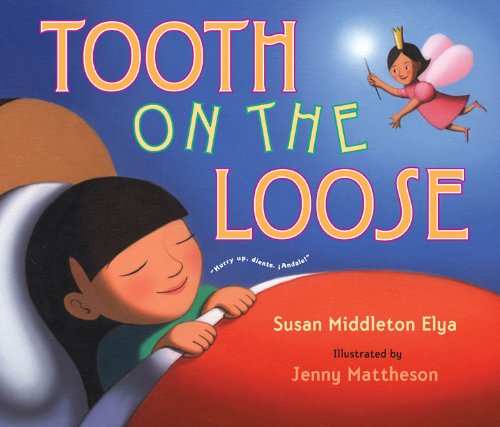
Tooth On The Loose

An original take on losing a tooth. This little girl has tried everything to make her loose tooth come out before her dad’s birthday (except letting her brother yank it) so she’ll have money to buy him a gift. Nothing has worked and now it’s the big day. She just can’t go to his party empty handed! At the last second, her mom helps her think of a gift that doesn’t require any money—just imagination and heart. I have no dinero, this card’s all I’ve got. But, Papi, te quiero, I love you a lot. And her dad couldnÂ’t be happier. Susan Middleton Elya’s trademark mix of Spanish vocabulary and fun verse combined with vibrant paintings by Jenny Mattheson will inspire lots of homemade gifts (and patience with loose teeth).