
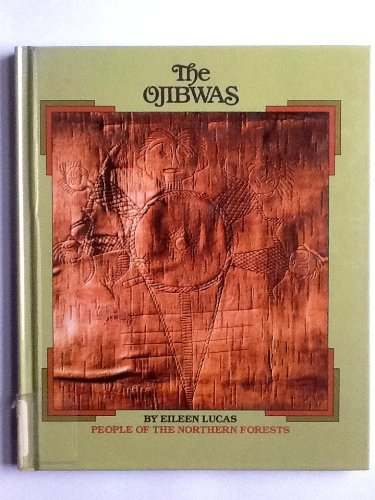
 Presents the history, culture, and contemporary life of the northeastern Native American people who, in the 1400s, migrated from the North Atlantic coast and settled around the Great Lakes.
North America
Northern Lights: The Soccer Trails
Northern Lights is a beautiful tale that explores the mystical aspects of the northern lights in Inuit culture. Scientists have their own explanations for the phenomenon that occurs when the night sky shimmers with milky white patterns, or displays all the colors of the rainbow. But the Inuit prefer their own explanation: They believe the souls of the dead are engaging in a lively game of soccer, just as they did when they were living. They run all over the sky chasing a walrus head that they use for a soccer ball. This is the story of Kataujaq and the intimate relationship she has with her mother. They do almost everything together; they hug, rub noses and say “Mamaq” which means “You smell so nice.” But a great sickness comes and Kataujaq’s mother is taken south to the white people’s hospital and never comes back. Kataujaq grieves, but is also able to rejoice when she and her grandmother watch the northern lights. This book celebrates family life, intimacy and the glory of nature.
White Tails Don’t Live In The City
 A look at the beauty of nature and living in the open country by One of Canada’s all-time best-selling authors and British Columbia’s most sought-after public speaker, David Bouchard.
The Frog Princess: A Tlingit Legend From Alaska
 Many men begin to flock to the Tlingit village hoping to make the headman’s beautiful daughter their bride, then retreat in disgrace as none is ever good enough for her. Weary of the suitors and their presents, she proclaims that she’s sooner marry a frog from the lake than any of the men after her heart. One night soon after, a very handsome young man–with slightly bulging eyes–appears on her threshold to fulfill her words, and she follows him underwater to her new home amongst the Frog People. But her peace is interrupted when her parents demand her return to the village, and the maiden finds herself caught in a clash between the worlds of land and sea. In Kimmel’s captivating retelling of the Tlingit legend, with breathtaking illustrations by Rosanne Litzinger, a maiden struggles to find the place where she truly belongs.
The Earliest Americans
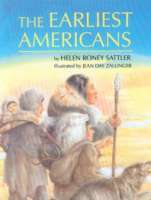
Presents the scientific evidence for the origins of the earliest people in the Americas and describes the accomplishments of their culturally diverse descendants prior to the arrival of Europeans in 1492.
The Inuit (First Americans)
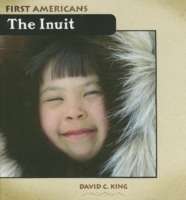
Provides comprehensive information on the background, lifestyle, beliefs, and present-day lives of the Inuit people.
Nutik, The Wolf Pup
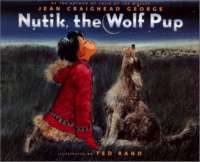
In an Eskimo village at the top of the world lived a little boy whose name was Amaroq. Named for the great wolf leader who saved the life of his big sister, Julie, Amaroq loved wolves as much as his big sister did.
One day Julie brings home a sickly wolf pup named Nutik for Amaroq to feed and tend. “Don’t fall in love with Nutik,” Julie warns, “or your heart will break when the wolves come to take their pup home.” Amaroq feeds and cares for Nutik, and soon the fuzzy little pup is romping and playing and following Amaroq everywhere. Amaroq and Nutik become best friends, but soon it’s time for Nutik to rejoin his wolf family. Will Amaroq be strong like the great wolf leader he was named after and be able to let Nutik go?
In this adventure-first told in Julie’s Wolf Pack, sequel to the Newbery Medal-winning Julie of the Wolves Jean Craighead George brings the Arctic world of Julie and her family to a picturebook audience.
Yamozha And His Beaver Wife
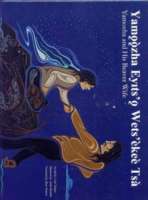
In this legend, Yamozha forgets his promise to his wife and as a result she turns into a giant beaver. He follows her all over Denedeh but is unable to catch her. This story tells of how this great medicine man shaped the land in the Tlicho region and its surrounding areas into what it is today.
The Eagle’s Shadow
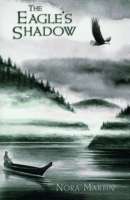
In 1946, while her emotionally distant father is in occupied Japan, a twelve-year-old girl spends a year with her mother’s relatives in a Tlingit Indian village in Alaska and begins to love and respect her heritage as she confronts the secret of her mother’s disappearance.
The Shaman’s Nephew: A Life In The Far North
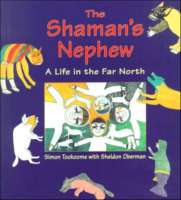
When Jewish author/storyteller Sheldon Oberman met Inuit artist/hunter Simon Tookoome, he knew the encounter was special. Still, he had no idea their meeting would result in an amazing collaboration that would span a decade. Through the use of many tape recordings and translations, Sheldon has painstakingly woven the threads of a remarkable man’s life into a book for all to treasure. With Tookoome’s drawings to enhance the text, Oberman has managed to express the cadence and voice of one of the last of the Inuit to live the traditional nomadic life in the Arctic. The Shaman’s Nephew magically transports readers to a cold climate that warms and grows more familiar with every turn of the page.