
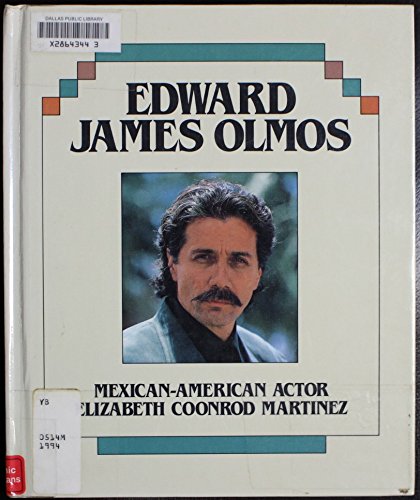
 Traces the life and career of the award-winning actor, looks at his roles in television and motion pictures, and describes his efforts to help the Hispanic community
Americas
Materials from the Americas
My Mother and I Are Growing Strong
A five-year-old describes the way her mother is working and coping with problems while her father is in prison.
Alicia’s Treasure
Alicia’s Treasure is the delightful tale of a young girl’s magical, fun-filled journey of discovery to the sea shore.
Alicia Afterimage

On the evening of September 24, 2004, sixteen-year-old Alicia MarÃa Betancourt was killed in a car accident. Popular, happy, fun-loving Alicia daughter, sister, and friend to so many gone in an instant. How would those left behind cope with such a sudden, devastating loss? Wrestling with grief, anger, mortality, and spirituality, Alicia’s loved ones struggle to create a lasting place in their hearts for someone who is no longer a physical presence. They share joyful and painful memories, and discover the resilient power of enduring friendship and love. In time, each person finds a way to heal while keeping Alicia’s vibrant spirit alive for those who knew her, and those who never will. Alicia Afterimage is a remarkable story of loss and recovery, but mostly it is a story of love. In this moving tribute to an extraordinary girl, readers will find a pathway through grief and a road map to remembrance. It is a book of comfort for all teens and adults who seek a way to ease the pain of losing someone they cherished.
The Heights

Henry liked to imagine his life began that cold rainy day in San Francisco when Mr. Earnshaw found him shivering by the side of the road. That was the day Henry met Catherine. For Henry, Catherine is like a precious gift. She pushes away his angry thoughts and makes him feel safe and calm. And though Mr. Earnshaw, a widow, raises the orphan and Catherine as brother and sister, their love for each other goes much deeper. They vow to always be together. But everything changes when Mr. Earnshaw dies suddenly and Hindley, Mr. Earnshaw’s own son, gains control of the family finances. Furiously jealous, Hindley never accepted Henry as a true member of the family. He works to sever Henry’s relationship with Catherine and the violent rage Henry has harbored since he was a child bubbles to the surface. . . . Contemporizing the classic novel, Wuthering Heights, notable YA author, Brian James delives into the dark nature of obsessive love, the social injustices of class, and the self-destructive power of revenge in this emotionally raw unforgettable offering.
Famous Hispanic Americans
Mini-biographies of fourteen outstanding Hispanic Americans include profiles and descriptions of the achievements of such figures as singer Gloria Estefan, actor Andy Garcia, tennis star Gigi Fernandez, educator Jaime Escalante, and Federico Pen+a1a, the Secretary of Transportation.
Case Of The Pen Gone Missing: A Mickey Rangel Mystery / El Caso De La Pluma Perdida: Coleccion Mickey Rangel, Detective Privado
When Toots Rodriguez approaches Mickey on the playground, he knows something is up. Toots, the prettiest girl in the fifth grade, never talks to Mickey, not even when they’re assigned to work together on a class project. But Toots has come to Mickey because she’s in trouble, and he’s a detective. The real deal. He has a badge and a certificate after completing an online course two years ago. ”You have to believe me, Mickey. I didn’t take that pen. I didn’t.” When Toots shines her big green eyes on him and insists repeatedly that she’s innocent, Mickey’s intuition tells him to run fast in the opposite direction. But he’s a sucker for a pretty girl, so he takes on the case of the missing pen. Rumor has it that Toots stole Eddy’s pen. It’s not just any old pen; it’s his dad’s pen. It has the White House logo on it. Eddy’s father, a senator from South Texas, got the pen from the President of the United States when he visited the White House last year. As Mickey begins his investigation, though, all the clues point to Toots and her newly ex-boyfriend as the primary suspects. The first book in The Mickey Rangel Mystery series for intermediate readers, author and educator Rene Saldana, Jr. has crafted another appealing book for kids, and his wise-cracking, smart protagonist will appeal to even the most reluctant readers.
My Land Sings: Stories from the Rio Grande
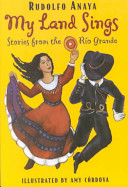
A collection of ten original and traditional stories set in New Mexico, including “Lupe and la Llorona,” “The Shepherd Who Knew the Language of Animals,” and “Coyote and Raven.”
See the review at WOW Review, Volume 3, Issue 2
Facts Of Life: Stories
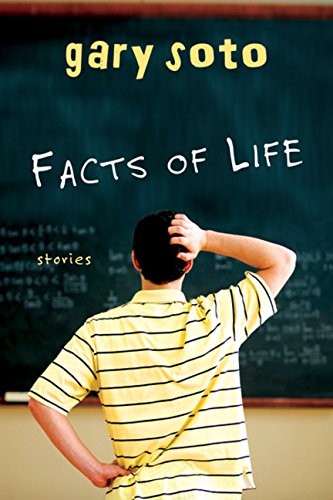
What do Gaby Lopez, Michael Robles, and Cynthia Rodriguez have in common? These three kids join other teens and tweens in Gary Soto’s new short story collection, in which the hard-knock facts of growing up are captured with humor and poignance.
Filled with annoying siblings, difficult parents, and first loves, these stories are a masterful reminder of why adolescence is one of the most frustrating and fascinating times of life.
Alamo Wars
 Josephine “Miss Mac” McKeever had taught English and Theatre Arts at Rosemont Middle School for so long that her colleagues sometimes joked that she would die in the classroom. So when she does just that, students, teachers, and administrators are stunned. After getting over the initial shock of losing their colleague, the staff agrees that they need to do something very special to acknowledge Miss Mac’s fifty-one years of dedication to the students at Rosemont and suggest naming the school’s auditorium after her. When Mrs. Frymire, her long-time colleague and friend, discovers a play written by Miss Mac years before, she knows that it would be the perfect memorial to present the play, Thirteen Days to Glory: The Battle of the Alamo, in the school’s auditorium named after her friend. But the teachers quickly learn that presenting a play isn’t as easy as Miss Mac had always made it seem, and soon the entire school community is in an uproar as conflicts related to the play emerge. Seventh-grader and Golden Gloves boxer Marco Diaz is, at first, excited to be chosen to play Jim Bowie, the brave Texan who defended the Alamo against Santa Anna’s Mexican Army. But his friend Raquel, an undocumented immigrant, calls him a sell-out because she believes the play makes heroes out of the people who stole her ancestors’ land. And Sandy Martinez, Miss Mac’s much younger replacement, finds the Mexican characters’ dialogue not only politically incorrect but downright offensive. Miss Mac’s friends, though, are adamantly opposed to making changes. Ms. Martinez also tries to convince them that giving certain students plum roles in exchange for their parents’ contributions is wrong, but ends up leaving the production in frustration. Meanwhile, rehearsals only serve to increase the tension between Marco’s friend Izzy Pena and the school bully Billy Ray Cansler. And it’s only a matter of time before Billy Ray corners Izzy when Marco isn’t around to protect him. Weary from struggling with disruptive kids, teachers and kids dropping out of the play, and parents with unreasonable expectations, everyone begins to wonder if they should just give up and cancel the production. Is it too much to expect everyone to work together to pay homage to a long-time friend and teacher?