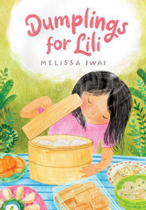
A Heartfelt Picture Book Celebration Of Food, Community, And Family–and Little Dumpling Treasures From Around The World.

Materials from the Americas
A Heartfelt Picture Book Celebration Of Food, Community, And Family–and Little Dumpling Treasures From Around The World.
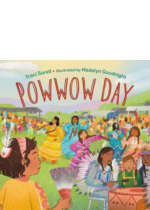
Because she has been very ill and weak, River cannot join in the dancing at this year’s tribal powwow, she can only watch from the sidelines as her sisters and cousins dance the celebration–but as the drum beats she finds the faith to believe that she will recover and dance again.
Resurrected by her brother using a forbidden combination of alchemy and engineering, apprentice curandera Cristina vows to protect the Republic of Santander against the lechuzas terrorizing immigrants and plaguing the country.

A boy and his mother refuse to identify themselves as American or Canadian at the border and become caught in the limbo between nations when they claim their citizenship as Blackfoot.
Borders is a WOW Recommends: Book of the Month for January 2022.
Eury comes to the Bronx as a girl haunted. Haunted by losing everything in Hurricane Maria–and by an evil spirit, Ato. She fully expects the tragedy that befell her and her family in Puerto Rico to catch up with her in New York. Yet, for a time, she can almost set this fear aside, because there’s this boy. Pheus is a golden-voiced, bachata-singing charmer, ready to spend the summer on the beach with his friends, serenading his on-again, off-again flame. That changes when he meets Eury. All he wants is to put a smile on her face and fight off her demons. But some dangers are too powerful for even the strongest love, and as the world threatens to tear them apart, Eury and Pheus must fight for each other and their lives.
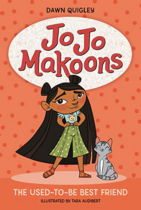
Jo Jo Makoons Azure is a spirited seven-year-old who moves through the world a little differently than anyone else on her Ojibwe reservation. It always seems like her mom, her kokum (grandma), and her teacher have a lot to learn–about how good Jo Jo is at cleaning up, what makes a good rhyme, and what it means to be friendly. Even though Jo Jo loves her #1 best friend Mimi (who is a cat), she’s worried that she needs to figure out how to make more friends. Because Fern, her best friend at school, may not want to be friends anymore.
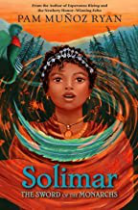
Ever since Solimar was a little girl, she has gone to the ouamel forest bordering her kingdom to observe the monarch butterflies during their migration, but always from a safe distance. Now, on the brink of her quinceañera and her official coronation, Solimar crosses the dangerous creek to sit among the butterflies. There, a mysterious event gives her a gift and a burden–the responsibility to protect the young and weak butterflies with her magical rebozo, or silk shawl.
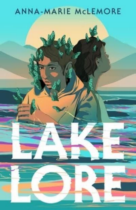
Everyone who lives near the lake knows the stories about the world underneath it, an ethereal landscape rumored to be half-air, half-water. But Bastián Silvano and Lore Garcia are the only ones who’ve been there. Bastián grew up both above the lake and in the otherworldly space beneath it. Lore’s only seen the world under the lake once, but that one encounter changed their life and their fate.
Then the lines between air and water begin to blur. The world under the lake drifts above the surface. If Bastián and Lore don’t want it bringing their secrets to the surface with it, they have to stop it, and to do that, they have to work together. There’s just one problem: Bastián and Lore haven’t spoken in seven years, and working together means trusting each other with the very things they’re trying to hide
Marisol loves her colorful island home. Cuba is vibrant with flowers and food and people but things are changing. The home Marisol loves is no longer safe, and then it’s no longer her home at all. Her parents are sending her to the United States. Alone.
Nothing about Marisol’s new life in cold, gray Brooklyn feels like home, not the language, school, or even her foster parents. But Marisol starts to realize that home isn’t always a place. And finding her way can be as simple as staying true to herself.
Featured in WOW Review Volume XIV, Issue 4.
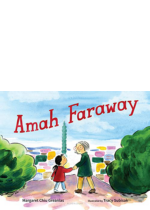
Kylie is nervous about visiting her grandmother-her Amah-who lives SO FAR AWAY.
When she and Mama finally go to Taipei, Kylie is shy with Amah. Even though they have spent time together in video chats, those aren’t the same as real life. And in Taiwan, Kylie is at first uncomfortable with the less-familiar language, customs, culture, and food. However, after she is invited by Amah-Lái kàn kàn! Come see!-to play and splash in the hot springs (which aren’t that different from the pools at home), Kylie begins to see this place through her grandmother’s eyes and sees a new side of the things that used to scare her. Soon, Kylie is leading her Amah-Come see! Lái kàn kàn!-back through all her favorite parts of this place and having SO MUCH FUN! And when it is time to go home, the video chats will be extra special until they can visit faraway again.
Featured in WOW Review Volume XV, Issue 2.