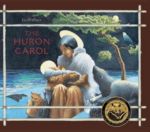
In the early 1600s Father Jean de Brébeuf came to Canada from his native France as a Jesuit missionary. He settled among the Huron, or Ouendat, people in what is now Midland, Ontario. Despite his missionary zeal, Brébeuf was sensitive to the people with whom he lived. He learned their language and he wrote, in Huron, the original version of this famous Christmas carol. He and his fellow priests, called Black Robes, and many of their Huron parishioners were killed in an Iroquois raid in 1649. But Brébeuf’s carol continued to be sung by successive generations of Hurons. Then in 1926, Toronto writer Jesse Edgar Middleton, inspired by Brébeuf, wrote his own version of the carol in English. His are the familiar words we sing today, describing the Huron landscape, flora and fauna in telling the Christmas story.
Americas
Materials from the Americas
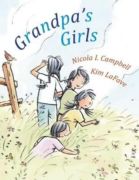
Grandpa’s Girls
A young girl delights in a visit to her grandpa’s farm. She and her cousins run through the fields, explore the root cellar where the smoked salmon and jars of fruit are stored, swing on a rope out the barn loft window, visit the appaloosa in the corral and tease the neighbor’s pig. The visit is also an opportunity for this child to ask Grandpa what her grandmother, Yahyah, was like, and explore the “secret room,” with its old wooden box of ribbons, medals and photos of Grandpa in uniform.
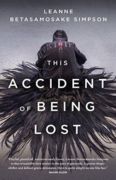
This Accident Of Being Lost
A collection of stories and songs by Nishnaabeg storyteller and writer Leanne Betasamosake Simpson. Blending elements of Nishnaabeg storytelling, science fiction, contemporary realism, and lyric voice, this collection encompasses broad and imaginative themes.
Good For Nothing
The year is 1959, and fifteen-year-old Nipishish returns to his reserve in northern Quebec after being kicked out of residential school, where the principal tells him he can look forward, like all Native Americans, to a life of drunkenness, prison, and despair. But despite his new freedom, the reserve offers little to a young Métis man. Both his parents are dead, his father Shipu, a respected leader, dying mysteriously at a young age. When Nipishish is sent to a strange town to live with a white family and attend high school, he hopes for the new life the change promises. But despite some bright spots, the adjustments prove overwhelming. Forced to return to his people, he must try to rediscover the old ways, face the officials who find him a threat, and learn the truth about his father’s death.
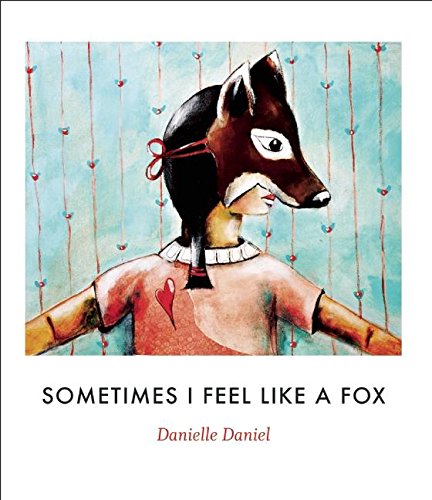
Sometimes I Feel Like A Fox
Ancient Thunder
Leo Yerxa, an artist of Ojibway ancestry, brings us an art book in which he celebrates wild horses and the natural world in which they lived in harmony.
Missing Nimâmâ
A young mother, one of the many missing indigenous women, watches over her small daughter as she grows up without her nimama, experiencing important milestones – her first day of school, first dance, first date, wedding, first child – from afar.
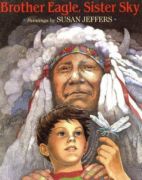
Brother Eagle, Sister Sky
A Suquamish Indian chief describes his people’s respect and love for the earth, and concern for its destruction.
The Truth About Stories: A Native Narrative (Massey Lectures)
“Stories are wondrous things,” award-winning Canadian author and scholar Thomas King declares in his 2003 CBC Massey Lectures. “And they are dangerous.” Stories assert tremendous control over our lives, informing who we are and how we treat one another as friends, family and citizens. With keen perception and wit, king illustrates that stories are the key to, and the only hope for, human understanding, He compels us to listen well.
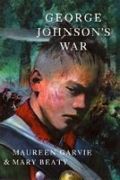
George Johnson’s War
Young George Johnson lives in extraordinary times. His father is Sir William Johnson, one of the richest and most powerful men in colonial New York. His mother is Molly Brant, step-daughter of a Mohawk chief and sister of Iroquois leader Joseph Brant. George spends his early years in a grand mansion. Johnson Hall is a place where Native American culture comfortably mingles with European customs. But George’s life changes as the War for American Independence looms. Peter goes off to fight for the king against the rebel Americans, and the allegiance of the families of the Mohawk Valley are torn. After William Johnson’s death in 1774, Molly and Joseph urge the Iroquois nations to support the Loyalists. As rebel forces take over the valley, George and his family are forced to flee. Molly sends George to boarding school in Montreal, where he spends three miserable years. Finally, he persuades his mother to allow him to join in a last raid on Mohawk Valley. In a riveting climax, he experiences first-hand the inglorious brutality and futility of war, and struggles with what it means to be half Mohawk. And at last he learns the truth about his brother’s fate.