
 A Cuban girl transforms her long and unruly hair into a garden.
Cuba
Love To Mamá: A Tribute To Mothers
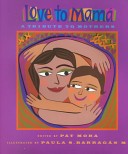
Thirteen Latino poets detail the powerful bond between mothers, grandmothers, and children, and describe the profound impact their mothers and grandmothers had on them, in an enchanting book filled with vivid illustrations.
Senor Cat’s Romance: And Other Favorite Stories from Latin America
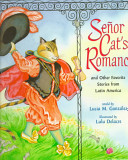
A collection of popular tales told to young children in places such as Argentina, Cuba, Colombia, Nicaragua, and Mexico.
A Mango In The Hand
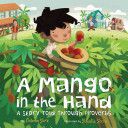
Francisco is finally old enough to journey to the mango grove all by himself to gather the mangoes for a special dinner. But bees swarm the fruit, and Francisco has trouble picking them from the tree. He returns to his father several times, and each time his father shares a different proverb to inspire Francisco to continue trying. “Querer es poder. Where there’s a will, there’s a way!” Finally, Francisco is able to gather some mangoes, and on his way home he stops to visit his uncle, grandmother, and aunt. Francisco shares his mangoes with them, and by the time he gets home he no longer has any! “Es mejor dar que recibir. Sometimes it’s better to give than to receive.” Luckily for Francisco, his generosity does not go unnoticed. “Amor con amor se paga. Love is repaid with love.” Readers are sure to be charmed by this humorous story about problem solving and sharing. The book includes a glossary of Spanish words.
The Barking Mouse
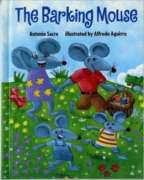
Mamá, Papá, Sister, and Brother Ratón go for a picnic on a beautiful day. After a delicious lunch of medianoches and lemonade, Mamá and Papá smooch—eeewww!—and Brother and Sister must find something to do. And what could be more fun than teasing the cat behind the fence? But the fence isn’t as high as they think! Faster than they can say, “Adios, Gato!” Brother and Sister are racing back to Mamá and Papá with the cat in pursuit. The brave Ratón family knows what to do—hide behind Mamá! But what will Mamá do?
Feminist and Abolitionist
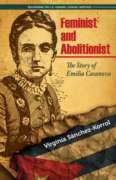
When asked to deliver contraband papers to her native island home of Cuba in 1852, twenty-year-old Emilia Casanova gulped audibly in a most unladylike manner. This was her chance to be in the thick of the rebellion against Spanish authority something she had always dreamed of instead of on the sidelines more befitting someone of her station. Even though she would be branded a traitor and endanger her family if she was caught, she pushed her fear aside and accepted the mission.
Back in Cuba following her first summer abroad, distributing seditious propaganda isn’t as easy as it had seemed while in New York. But she honors her commitment to the Junta Cubana, a group of Cuban revolutionaries living in exile in the U.S., and begins her efforts to convert compatriots to the cause of independence from Spain. She begins planting the seeds of insubordination in her social circle and enlists two of her brothers in the cause. Things become more dangerous when she targets soldiers in the garrison close to the family’s home, and it doesn’t take long for one of her brothers to be exposed. Soon Emilia’s father is forced to lead his entire family away from their home and into exile in the U.S.
Raised in an elite, slave-holding Cuban family, Emilia Casanova spent most of her adult life in New York City, where she worked passionately for Cuba’s freedom from Spain and the black man’s freedom from servitude. A wife and mother, she created the first women’s political organization dedicated to supporting the rebel cause during Cuba’s Ten Years’ War. Puerto Rican and Latino Studies professor Virginia Sanchez-Korrol introduces the fascinating but little-known story of a Latin American activist to an English-speaking audience.
The Lightning Dreamer
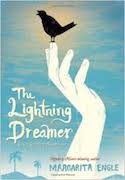
In free verse, evokes the voice of Gertrudis Gomez de Avellaneda, a book-loving writer, feminist, and abolitionist who courageously fought injustice in nineteenth-century Cuba. Includes historical notes, excerpts from her writings, biographical information, and source notes.
Join the discussion of The Lightning Dreamer as well as other books set in Cuba on our My Take/Your Take page.
Guantanamo Boy
Six months after the events of September 11, 2001, Khalid, a Muslim fifteen-year-old boy from England, is kidnapped during a family trip to Pakistan and imprisoned in Guantanamo Bay, Cuba, where he is held for two years suffering interrogations, water-boarding, isolation, and more for reasons unknown to him.
Featured in WOW Review Volume IX, Issue 2.
Good-Bye, Havana! Hola, New York!
When five year old Gabriella hears talk of Castro and something called revolution in her home in Cuba, she doesn’t understand. Then when her parents leave suddenly and she remains with her grandparents, life isn’t the same. Soon the day comes when she goes to live with her parents in a new place called the Bronx. It isn’t warm like Havana, and there is traffic not the ocean outside her window. Their life is different- it snows in the winter and the food at school is hot dogs and macaroni. What will it take for the Bronx to feel like home?
The Wild Book
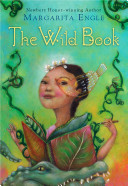
Fefa struggles with words. She has word blindness, or dyslexia, and the doctor says she will never read or write. Every time she tries, the letters jumble and spill off the page, leaping and hopping away like bullfrogs. How will she ever understand them? But her mother has an idea. She gives Fefa a blank book filled with clean white pages. “Think of it as a garden,” she says. Soon Fefa starts to sprinkle words across the pages of her wild book. She lets her words sprout like seedlings, shaky at first, then growing stronger and surer with each new day. And when her family is threatened, it is what Fefa has learned from her wild book that saves them.
See the review at WOW Review, Volume 4, Issue 3