The Winter War

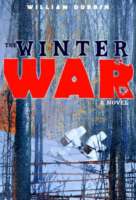
When the Soviet Union invades its tiny neighbor Finland in November 1939, Marko volunteers to help the war effort. Even though his leg was weakened by polio, he can ski well, and he becomes a messenger on the front line, skiing in white camouflage through the forests at night. The dark forest is terrifying, and so are the odds against the Finns: the Russians have 4 times as many soldiers and 30 times as many planes. They have 3000 tanks, while the Finns have 30. But a tank is no help in the snowy forest–a boy on skis is. And the Russians don’t know winter the way the Finns do, or what tough guerrilla warriors the Finns are. Marko teams up with another messenger, Karl. Gradually Marko learns that Karl’s whole family was killed by the Russians. And Karl has a secret–he’s really Kaari, a girl who joined up to get revenge for her family’s deaths.
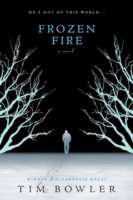
Frozen Fire

A paranormal thriller from Carnegie Medal–winner Tim Bowler! It starts with a phone call. “I’m dying,” a voice tells Dusty. Who is he and how has he gotten her cell number? Dusty wants no part of this strange boy . . . until he begins saying things that only someone who knows her intimately could say—things that lead her to think he knows the whereabouts of her brother, who disappeared over a year ago. Suddenly drawn in, Dusty very much wants to save this boy. Trouble is, she cannot find him. Part human, part spirit, he won’t let himself be found. He is too dangerous, he says. There are mobs of people who agree and who want to see this boy dead . . . and who will hurt anyone who stands in their way. A gripping, hair-raising mystery about a boy not of this world, and a girl determined to protect him.

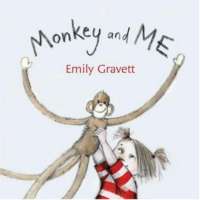
Monkey and Me

Monkey and me, Monkey and me, Monkey and me, We went to see… A little girl and her toy monkey love imitating different animals, everything from jumping like kangaroos to waddling like penguins! Open this book and play along with them.

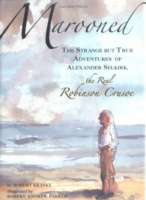
Marooned: The Strange But True Adventures of Alexander Selkirk

In 1704, Alexander Selkirk was voyaging across the South Pacific when, after arguing with the ship’s captain, he was put ashore—alone—on an uninhabited island. Equipped with little more than a musket and his wits, Selkirk not only survived in complete solitude for more than four years, but came to be quite comfortable and happy. After being rescued by a British privater in 1709, he took a leading role in several dramatic captures of merchant ships. Although he returned to civilization a rich man,he couldn’t find a place in society and always longed to return to the paradise of his island. Selkirk’s well-documented adventures so inspired Daniel Defoe that they became the basis for his perennial classic, Robinson Crusoe. Author’s note, glossary, bibliography,index.

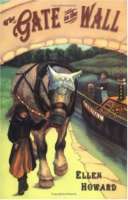
The Gate In The Wall

Pressed into service as a canal woman, 10-year-old Emma finds ways to utilize her artistic gifts. Although it is a better existence than her strenuous job in the English silk mill, she feels guilty over the sister she left behind. Authentic details make this an engaging story–one that reveals the hardships of the mid-1800s when life for the poor in England was unrelentingly cruel. It is also a liberating tale as Emma draws on her inner strength to find her true calling.

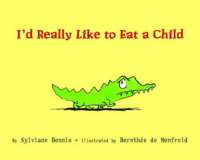
I’d Really Like to Eat a Child

A scrawny little crocodile wants the opportunity to bite off more than he can chew. He’s tired of bananas; today he’d like to eat a child. But he’s smaller than he thinks, and the little girl he chooses for his first meal puts him in his place—she picks him up and tickles his tummy! The little crocodile is going to have to eat a lot of bananas and grow a lot bigger before he can add children to his menu! Simple yet hilarious artwork brings this droll story to life.

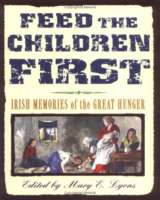
Feed the Children First: Irish Memories of the Great Hunger

The great Irish potato famine — the Great Hunger — was one of the worst disasters of the nineteenth century. Within seven years of the onset of a fungus that wiped out Ireland’s staple potato crop, more than a quarter of the country’s eight million people had either starved to death, died of disease, or emigrated to other lands. Photographs have documented the horrors of other cataclysmic times in history, but there are no known photographs of the Great Hunger. Mary E. Lyons combines first-person accounts of those who remembered the Great Hunger with artwork that evokes the times and places and voices themselves. The result is a close-up look at incredible suffering, but also a celebration of joy the Irish took in stories and music and helping one another — all factors that helped them endure.