The story of a Palestinian family’s ties to the land, and how one young girl finds a way to care for her home, even as she says goodbye.
Featured in WOW Review Volume XVII, Issue 1.

The story of a Palestinian family’s ties to the land, and how one young girl finds a way to care for her home, even as she says goodbye.
Featured in WOW Review Volume XVII, Issue 1.
When the ancient Tablet of Destinies falls into the wrong hands, it is up to Sikander Aziz and his friends to save humanity from having its future erased by two fearsome Mesopotamian gods.
Eleven-year-old Iraqi, Mooz, yearns to taste the bananas that have been made unavailable by warfare.
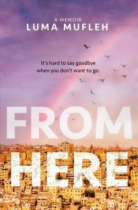
Refugee advocate Luma Mufleh writes of her tumultuous journey to reconcile her identity as a gay Muslim woman and a proud Arab-turned-American refugee.
Fantastic Beasts and Where to Find Them meets Neil Gaiman in this thrilling novel about an Iranian American girl who discovers that her father was secretly a veterinarian to mythical creatures and that she must take up his mantle, despite the many dangers.
Dounia is the story of a little girl who loves her home city of Aleppo, Syria, and its many smells, sights, and traditions. But when war breaks out, Dounia and her grandparents must flee Aleppo to find safety. Before they go, their neighbour reads their future in a cup of coffee, she sees a long difficult journey ahead of the family and a blue house awaiting them at the end. Taking only a bird carved from Aleppo soap and four little barake seeds in her pocket, Dounia faces dangerous waters, a camp surrounded by barbed wire, and unfriendly soldiers, and she wonders where she and her family belong in the world. Remembering the ancient knowledge that barake seeds ward off evil, she pulls one from her pocket to use for each of the threats they face. Magically, the seeds from their faraway home help them along their way, until they finally find the blue house at the end of their journey.
In her new home, Dounia plants her final seed in a pot so it can grow and offer more seeds, while also keeping a piece of Aleppo with her. The baraké seeds represent the Syrian culture. Although Dounia is fleeing her country, she carries with her the strength of her people. It is by tapping into her roots, represented by the seeds, that she finds her own strength and resilience. The magical moments brought about by the baraké seeds can be interpreted as Dounia’s imagination it’s a way of seeing the war and the migration from a six year old’s perspective. Dounia does not understand everything that is going on, but she is not a powerless victim. By using the seeds, she feels she is taking an active part in her own destiny. In the end, whether it is magic or Dounia’s imagination at play, it’s a story about obstacles faced by migrants and about the courage they have in facing these obstacles. As Marya puts it in her article for TBI Magazine, it reverses the common narrative in North American media that Syria is synonymous with devastation and destruction, and that Syrian refugees can only be victims of their circumstance, rather than brave, vibrant heroes who can take charge of their own stories.
When she learns that her brother is spreading the nation’s secret spice magic to outsiders, sixteen-year-old Shield warrior Imani sets out on a dangerous mission to find him, discovering secrets that lie beyond the Forbidden Wastes and in her own heart.
The Little Black Fish may be small, but he has big questions about the world and is determined to find the answers to them. Whilst all the other fish in the pond just follow each other around, too scared to do anything different, Little Black Fish swims over the edge of the pool, into the stream towards the river and on to the sea. On his adventure Little Black Fish sees many wondrous and beautiful things, encounters danger lurking around every corner and is finally faced with his ultimate challenge.
Samira is excited to go to the bazaar with her grandmother for the first time, but finds the bustling market to be intimidating, until Mama Shamsi helps her find a way to feel safe.
This eye opening memoir tells the story of a young girl’s life in Syria, her family’s wrenching decision to leave their home, and the upheaval of life in a refugee camp. Though her life had utterly changed, one thing remained the same. She knew that education was the key to a better future for herself, and so that she could help her country. She went from tent to tent in the camp, trying to convince other kids, especially girls, to come to school. And her passion and dedication soon had people calling her the Malala of Syria. Muzoon has grown into an internationally recognized advocate for refugees, for education, and for the rights of girls and women, and is now a UNICEF goodwill ambassador—the first refugee to play that role. Muzoon’s story is absolutely riveting and will inspire young readers to use their own voices and stand up for what they believe in.