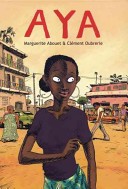
Aya

The original volume of Aya debuted to much critical acclaim, receiving a Quill Award nomination and praise for its accessibility and for the rare portrait of a warm and vibrant Africa it presented. This continuation of the story returns to Africa’s Ivory Coast in the late 1970s, where life in Yop City is as dramatic as ever. The original cast of characters is back in full force, with a case of questionable paternity fanning the flames of activity in the community. The new mother Adjoua has her friends to help with the baby, perhaps employing Aya a bit too frequently, while a new romance leaves Bintou with little time for her friends, let alone their responsibilities. The young women aren’t the only residents of Yopougon involved in the excitement, however; Aya’s father is caught in the midst of his own trysts and his employer’s declining Solibra beer sales, and Adjoua’s brother finds his share of the city’s nightlife.

See the review at WOW Review, Volume 5, Issue 2
High Riders, Saints and Death Cars: A Life Saved by Art

Nicholas Herrera started life as a mischievous, dyslexic boy, born into one of the old Spanish families of New Mexico. Bad teachers and poor schooling helped him to lose himself in drugs, drinking, riding motorcycles and driving fast cars. A near-death experience, a wonderful mother and a fascination with making art saved him. Today Nicholas Herrera is one of the most noted Santeros in the US. His work is displayed in folk-art galleries across the country and is collected by the Smithsonian. He is noted for the highly personal, political nature of his work and his innovative treatment of what can sometimes be a rather bland art form designed to sell to tourists. His work is intensely personal and even confessional. A survivor of alcoholism and drug addiction, which almost led to his death in a terrible car crash, Herrera is now sober and remarkably productive. His art is his life and his life is his art. Extraordinarily charismatic, Herrera is the grandson, nephew and son of artists. His young daughter is now following in his footsteps.

Good Night, Commander

The Commander has lost his mother and one of his legs in the Iran-Iraq war. Now he spends most of his time alone in his room where he recreates the conflict with an imaginary enemy and soldiers, trying to avenge his losses. His father urges him to take off his artificial leg when he is at home, to join his uncles and aunties who have arrived for dinner. But when he does, he finds out that they are all about to go off to meet his “new mother.” Back in his room the imaginary war continues, and he confronts an enemy soldier who is also missing a limb. A battle seems inevitable until The Commander offers the enemy his artificial leg.

See the reviews at WOW Review, Volume 2, Issue 4 & Volume 5, Issue 3.

By the Dawn’s Early Light – Spanish (Libros Colibri)

This Spanish translation of the gentle story By the Dawn’s Early Light reflects an experience familiar to many Spanish-speaking children: life in a household where the parent works at night. There isn’t much time to see Mama; but sometimes, early in the morning, Raquel hears her mother come home. She wakes her brother and they go downstairs to share some quiet time with Mama. Full color.

Only You/Solo Tu

With tender illustrations and prose as warm as a parent’s embrace, this love poem from a baby bear to his mother celebrates the simple activities—such as reading, playing, and eating together—that are so important to a growing child’s development. Now available in a Spanish-English edition, Only You also includes a note from esteemed pediatrician and author Perri Klass.

Antonio’s Card/La Tarjeta De Antonio

With Mother’s Day coming, Antonio finds he has to decide about what is important to him when his classmates make fun of the unusual appearance of his mother’s partner, Leslie.

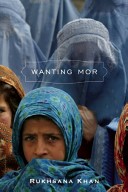
Wanting Mor

Jameela and her family live in a poor, war-torn village in Afghanistan. Even with her cleft lip and lack of educational opportunities, Jameela feels relatively secure, sustained by her Muslim faith and the love of her mother, Mor. But when Mor dies, Jameela’s father impulsively decides to start a new life in Kabul. Jameela is appalled as he succumbs to alcohol and drugs, then suddenly remarries, a situation that soon has her a virtual slave to a demanding stepmother. After she’s discovered trying to learn to read, Jameela is abandoned in a busy market, eventually landing in an orphanage run by the same army that killed so many members of her family. Throughout it all, the memory of her mother sustains her, giving Jameela the strength to face her father and stepmother when fate brings them together again. Inspired by a true story, and set in a world far removed from that of Western readers, this powerful novel reveals that the desire for identity and self-understanding is universal.

Take a closer look at Wanting Mor as examined in WOW Review.

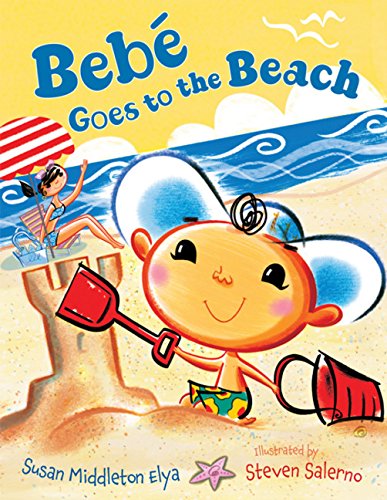
Bebe Goes To The Beach

bebeMama leaves the shopping behind to spend a relaxing day at the beach. But sweet Bebe won’t sit still! He toddles after the waves, chases a bouncing pelota, and even surfs on a sand sculpture. When Bebé finally tuckers out, Mama gets her chance to soak up el sol.     Mama and Bebe spiced things up in their first book together, Bebe Goes Shopping–and now they’re at it again!     Includes a glossary of Spanish words.

My Mother and I Are Growing Strong

A five-year-old describes the way her mother is working and coping with problems while her father is in prison.