
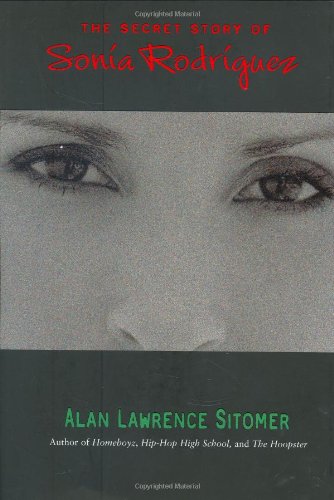
 Sonia Rodriguez was born in the United States, but her parents are Mexican immigrants who came to California before she was born. Her father has three Social Security numbers, her mother is pregnant (again), and neither of them speaks English. Sonia’s mother spends most of her time in bed, watching soap operas, and letting Sonia clean up after her brothers. Sonia’s father works dutifully to support his family, but he knows that his daughter’s dreams are bigger than making tamales for family get-togethers. When Sonia attempts to put school work before her familia, her mother decides that it’s time for Sonia to visit her grandmother in Mexico to learn “the ways of the old world.” While in Mexico, Sonia spends time with her wise grandmother and her cousin Maria who teach her that while familia is important, the most important thing is to follow your heart. Sonia returns to the States determined to succeed in school, but the birth of her new twin siblings, inappropriate advances from her drunk uncle (Drunkle), and a forbidden relationship with an El Salvadorian boy push school to the back burner. If only Sonia can find the time to cook dinner, secretly meet with her boyfriend, avoid her Drunkle, AND finish her homework, she just might be able to graduate from high school…
Age
Catalog sorted by age group
Julian Rodriguez Episode One
 Julian Rodriguez is on a mission for the Mothership. He’s been sent to Earth to study human lifeforms and their bizarre habits–from their disgusting diet (orange sticks named carrots, flavorless liquid called water, and the revolting substance known as vegi-dogs) to their repressive treatment of their young (forcing them to carry out menial tasks known as chores, withholding access to the great cultural masterpieces called cartoons). When Julian’s Maternal Unit assigns a hideous task, it’s nearly too much for the hardened space veteran to bear–but he finds his courage at last. * “First in what readers will hope will be a robust series, this hybrid of fiction and graphic novel dusts off a favorite conceit with a slick swipe of edgy visuals and tart commentary….It’s impossible to read this without laughing.” — Publishers Weekly (starred review)
Iguanas In The Snow / Iguanas En La Nieve: And Other Winter Poems / Y Otros Poemas De Invierno
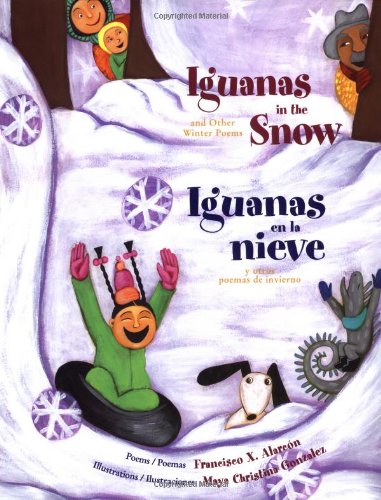 This collection invites us to celebrate winter — by the seashore, in the city of San Francisco, and in the ancient redwood forests of the Sierras. We see a city where people have become bridges to each other and children sing in two languages. A family frolic in the snow reminds the poet of the iguanas playing by his grandmother’s house in Mexico. The seedling redwoods promise tomorrow. Maya Christina Gonzalez creates a spirited family of children and adults making their way through lively settings.
Cesar: Si, Se Puede! / Yes, We Can!
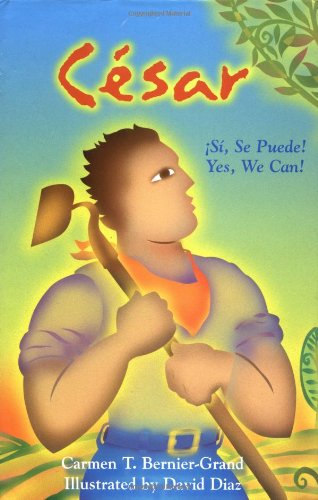
An award-winning title now available in Spanish
Born in 1927 in Yuma, Arizona, César Chavez lived the hard-scrabble life of a migrant worker during the Depression. Although his mother wanted him to get an education, César left school after eighth grade to work. He grew to be a charismatic leader and founded the National Farm Workers Association, an organization that fought for basic rights for farm workers. In powerful poems and dramatic stylized illustrations, Carmen T. Bernier-Grand and David Díaz pay tribute to Chavez’s legacy helping migrant workers improve their lives by doing things by themselves for themselves.
Abuelita Full Of Life/Abuelita Llena De Vida
 Jose is not sure what to expect when his grandmother from Mexico moves in…except that he will certainly have to change his ways. What he discovers is that he doesn’t mind one bit. Abuelita is full of surprises! She is full of life!
Bebe Goes To The Beach
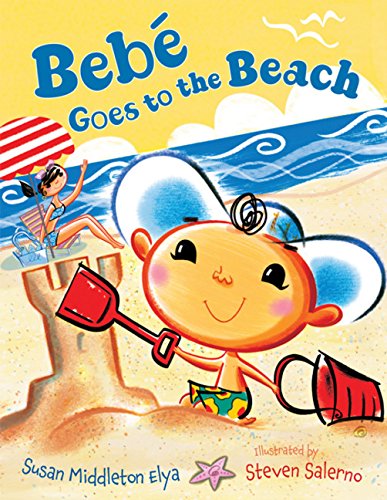 Mama leaves the shopping behind to spend a relaxing day at the beach. But sweet Bebe won’t sit still! He toddles after the waves, chases a bouncing pelota, and even surfs on a sand sculpture. When Bebé finally tuckers out, Mama gets her chance to soak up el sol. Mama and Bebe spiced things up in their first book together, Bebe Goes Shopping–and now they’re at it again! Includes a glossary of Spanish words.
The Moon is La Luna: Silly Rhymes in English And Spanish
This book is full of monos, ratons, and osos. What’s that, you say? You don’t know what a mono is? What about a rio, some pelo, or even an árbol? No? Still no idea? You should read this libro, then. By the time you finish, you’ll be able to recognize and understand more than fifty simple Spanish words. You’ll be saying, “Mas, por favor!” You may even ask your papá to buy you a gato or pato. (But not your papa. Potatoes can’t buy pets.)
Blow Away Soon
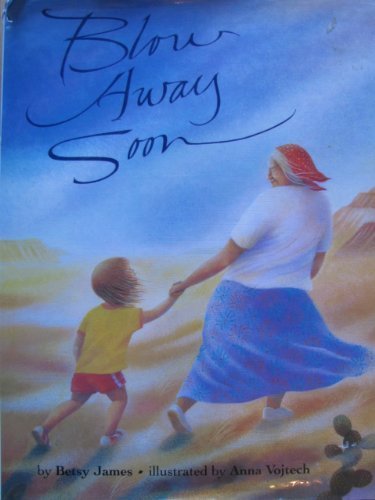 Disliking the wind that whisks away her favorite possessions, Sophie appeals to her grandmother for help and is instructed on how to build a blow-away-soon, an appeasing gift for the wind, in a story about keeping and giving away.
Family Pictures, 15th Anniversary Edition / Cuadros De Familia, Edición Quinceañera
Family Pictures is the story of Carmen Lomas Garza\’s girlhood: celebrating birthdays, making tamales, finding a hammerhead shark on the beach, picking cactus, going to a fair in Mexico, and confiding to her sister her dreams of becoming an artist. These day-to-day experiences are told through fourteen vignettes of art and a descriptive narrative, each focusing on a different aspect of traditional Mexican American culture. The English-Spanish text and vivid illustrations reflect the author\’s strong sense of family and community. For Mexican Americans, Carmen Lomas Garza offers a book that reflects their lives and traditions. For others, this work offers insights into a beautifully rich community.
See the review at WOW Review, Volume 3, Issue 2
Let’s Eat!/A Comer! (My Family: Mi Familia)
It’s dinnertime. Look at all the food! Es la hora de cenar. ¡Cuánta comida! There are beans, tortillas, Hay frijoles, tortillas, cheese, and even a green salad. queso y hasta una ensalada de lechuga. Enough for the whole family. Suficiente para toda la familia. Let’s sit down and enjoy it together. Vamos a sentarnos y disfrutarla juntos. Let’s eat! ¡A comer! This first book in the new bilingual My Family/Mi familia series will charm readers with its close-knit family—a family that is grateful for its many blessings. Éste es el primer libro de la nueva serie My Family/ Mi familia. Los lectores quedarán encantados con esta familia unida que se siente agradecida por todas sus bendiciones.