
In a bilingual retelling of a famous Mexican legend, Prietita sets out to find the missing herb that can cure her mother’s illness and, while lost in the woods, comes face to face with the mysterious la Llorona, the ghost woman.
Latinx in US
Red Hot Salsa: Bilingual Poems On Being Young and Latino in the United States
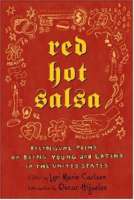
A collection of English and Spanish bilingual poems from the editor of Cool Salsa.
The Pool Party
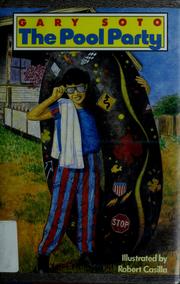 Invited to Tiffany Perez’s pool party, Rudy Herrara longs to make a big impression on Tiffany and his classmates. By the author of Living up the Street.
The Throwaway Piece
 Jewel is shuttled from one foster home to another. But Jewel wasn’t always a “State Kid.” Her mother Angela’s constant search for happiness through a steady stream of unsavory boyfriends leads to the state’s intervention in Jewel’s life. Listening to her new foster mother’s list of “nos”—no drugs, no lying, no stealing, no skipping school, no boys in or out of the house, no being late—Jewel realizes that her mother said “yes” a lot. Probably too much. She remembers saving Angela’s life when one of many boyfriends beat her, trying to hide another boyfriend’s attempts to rape her when she was fourteen, and being sent to a foster home to please the latest boyfriend. But still, Jewel worries about her mother and knows that she will once again pick up the pieces when the latest jerk leaves. Bit by bit Jewel’s life begins to change for the better after her latest move to a new foster home and school. Although most people can’t see past her tough “State Kid” façade—spray-painted hair, heavy make-up, ripped clothing and unlaced shoes—her English teacher realizes there’s more to her then meets the eye. He convinces Jewel to tutor a fellow student who needs help with math, and gradually she learns how to make friends. In the process, she touches the lives of many people around her, including her social worker, teachers who believe in her, her new-found, tentative friends, and even their parents. But when she’s forced to choose between her life-long job—taking care of her mother”—and doing what’s right for herself, old habits and loyalties are hard to break. Jewel is sure that this time, she can save her mom. But will she be able to save herself?
Too Many Tamales
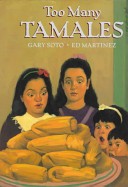
While preparing dough for her family’s Christmas tamales, Maria discovers that she has lost her mother’s prized diamond ring somewhere in the dough and sets out to eat her way through the many finished tamales to find the missing ring.
The Dead And The Gone
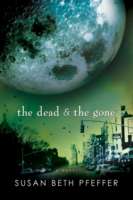
Susan Beth Pfeffer’s Life as We Knew It enthralled and devastated readers with its brutal but hopeful look at an apocalyptic event–an asteroid hitting the moon, setting off a tailspin of horrific climate changes. Now this harrowing companion novel examines the same events as they unfold in New York City, revealed through the eyes of seventeen-year-old Puerto Rican Alex Morales. When Alex’s parents disappear in the aftermath of tidal waves, he must care for his two younger sisters, even as Manhattan becomes a deadly wasteland, and food and aid dwindle.>With haunting themes of family, faith, personal change, and courage, this powerful new novel explores how a young man takes on unimaginable responsibilities.
A Birthday Basket for Tia
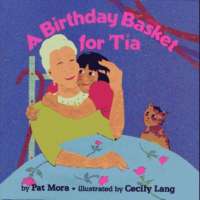
With the help of her cat, Chica, Cecilia prepares a special gift in honor of her great-aunt’s ninetieth birthday, a celebration basket filled with things to remind Tia of the wonderful moments that she and Cecilia have shared.
Fiesta Fiasco
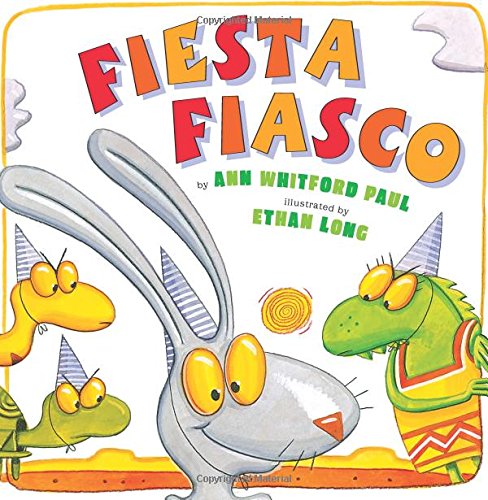 There is another desert party in the works in this spicy companion book to Mañana, Iguana. This time it is Snake’s birthday, and Iguana, Tortoise, and Rabbit are shopping for birthday gifts to bring to his fiesta. But what presents should they buy for Snake? In a sneaky twist, Rabbit convinces them to buy gifts that aren’t for Snake at all—but for him! With a clever text, a spattering of Spanish vocabulary. and lively illustrations, this author-illustrator team presents quite the fiesta fiasco. Glossary included.
Let’s Eat!/A Comer! (My Family: Mi Familia)
It’s dinnertime. Look at all the food! Es la hora de cenar. ¡Cuánta comida! There are beans, tortillas, Hay frijoles, tortillas, cheese, and even a green salad. queso y hasta una ensalada de lechuga. Enough for the whole family. Suficiente para toda la familia. Let’s sit down and enjoy it together. Vamos a sentarnos y disfrutarla juntos. Let’s eat! ¡A comer! This first book in the new bilingual My Family/Mi familia series will charm readers with its close-knit family—a family that is grateful for its many blessings. Éste es el primer libro de la nueva serie My Family/ Mi familia. Los lectores quedarán encantados con esta familia unida que se siente agradecida por todas sus bendiciones.
Abuelos
 The tradition of los abuelos comes from northern New Mexico. In the cold months of midwinter, village men disappear to disguise themselves as scary old men and then descend on the children, teasing them and asking if they’ve been good. The abuelos encourage the little ones to dance and sing around huge bonfires. Afterwards, everyone enjoys cookies and empanadas. In this charming book, young Ray and Amelia move to a new village and experience the fright and fun of los abuelos for the first time. Amelia Lau Carling researched the region for her vibrant artwork, and author Pat Mora’s lively text captures the appeal of an old-world celebration now being revived.