The Peanut Man

The story of a Cuban refugee and her joy in an unexpected encounter that connects her beloved home in Havana with her new home in Atlanta. Each evening Coqui waits for the familiar cry of the Peanut Man—”¡Mani! Peanuts!”—and watches for him to appear on the street below her window. They always greet each other in their own special way—Coqui tucks her thumbs in her ears and sticks out her tongue at Emilio. And Emilio, to her great amusement, does the same in return. Night after night, the two friends continue their ritual.

One evening, Coqui sadly announces, “Nos vamos.” She tells him that they have to leave Cuba. They are going to the United States. Emilio tries to assure her that she will like many things about los Estados Unidos, especially beisbol, her favorite sport. “But don’t forget your friend Emilio,” he says as he walks away. “¡Nunca!” she calls out through tears. She could never forget him.

Coqui and her family arrive in Decatur, Georgia, in the dead of winter to snow-covered ground. Her father seals the windows with duct tape and they await the arrival of spring. Coqui watches for the Peanut Man, but he does not appear. Several years pass, she learns wobbly English, and becomes a devoted Atlanta Braves fan. She forgets her beloved Peanut Man. Then one day her father surprises her with the perfect birthday gift—two tickets for a Braves game to see their favorite player Hammerin’ Hank Aaron. As they settle into their seats amid the cheering crowds, Coqui hears a man yelling “Peanuts! Get your peanuts!” The delicious smell of roasted peanuts reaches her and memories of home and Emilio rush into her head.
Granny Came Here On The Empire Windrush

Ava is asked to dress up as an inspirational figure for her school assembly, but who should she choose? Granny suggests famous familiar figures such as Winifred Atwell, Mary Seacole, and Rosa Parks, and tells Ava all about their fascinating histories, but Ava’s classmates have already claimed them and she must choose someone else. But who? When Ava finds a mysterious old suitcase and Granny shares her own history, and how she came to England on the Empire Windrush many years ago. She tells her story through the precious items that accompanied her on the original voyage, each one evoking a memory of home. As Ava listens to how Granny built a life for herself in England, determined to stay against the odds and despite overwhelming homesickness, and she realizes that there is a hero very close to home, her very own brave and beloved granny.

The Cricket War

A gripping story of a boy’s escape from Communist Vietnam by boat, based on the author’s own experience. It’s 1980, and 12-year-old Tho Pham lives with his family in South Vietnam. He spends his afternoons playing soccer and cricket fighting with his friends, but life is slowly changing under the Communists. His parents are worried, and Tho knows the Communist army will soon knock on their door to make his brother, and then him, join them. Still, it shocks him when his father says that arrangements have been made for him to leave Vietnam by boat, immediately. Thọ tries to be brave as he sets out on a harrowing journey toward the unknown.

This book is part of the Worlds of Words Global Reading List for 2023/24.

The Words We Share

A young girl helps her dad navigate life in a new country where she understands the language more than he does, in an unforgettable story about communication and community. Angie is used to helping her dad. Ever since they moved to Canada, he relies on her to translate for him from English to Chinese. Angie is happy to help: when they go to restaurants, at the grocery store, and, one day, when her dad needs help writing some signs for his work. Building off her success with her dad’s signs, Angie offers her translation skills to others in their community. She’s thrilled when her new business takes off, until one of her clients says he’s unhappy with her work. When her dad offers to help, she can’t imagine how he could. Working together, they find a surprising solution, fixing the problem in a way Angie never would have predicted.

A gorgeously illustrated picture book from up-and-coming author-illustrator Jack Wong (When You Can Swim, Scholastic) that is at once a much-needed exploration of the unique pressures children of immigrants often face, a meditation on the dignity of all people regardless of their differences, and a reminder of the power of empathy

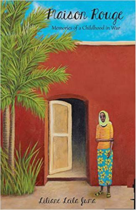
Maison Rouge: Memories Of A Childhood In War

“Liliane Leila Juma was 16 years old when her family home in the Democratic Republic of the Congo was destroyed by rebel soldiers. In this gut-wrenching memoir, she gives an account of her life before and after her family was torn apart by the twin nightmares of civil war and invasion. Sincere and revealing, it gives a moving account of a young girl’s journey from a protected and secure family life, through a series of brutal conflicts that saw her father murdered and her former life utterly destroyed. Maison Rouge is a story of war, and unspeakable loss. It is also the story of survival. Eventually, through the United Nations refugee program, Leila and her family were finally able to relocate to Canada.”– Provided by publisher.

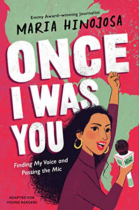
Once I Was You

“There is no such thing as an illegal human being or an illegal immigrant.” Maria Hinojosa is an Emmy award-winning journalist and was the first Latina to found a national independent non-profit newsroom in the United States. But before all that, she was a girl with big hair and even bigger dreams. Born in Mexico and raised in the vibrant neighborhood of Hyde Park, Chicago, Maria was always looking for ways to better understand the world around her-and where she fit into it. Here, she combines stories from her life, beginning with her family’s indelible experience of immigration all the way through the first time she heard her own voice on national radio, with truths about the United States’ long and complicated relationship with immigrants. Funny, frank, and wise, Maria’s story is one you will want to read again and again, and her voice will inspire you to find your own.

Barefoot Dreams Of Petra Luna

Based on a true story, the tale of one girl’s perilous journey to cross the U.S. border and lead her family to safety during the Mexican Revolution.

Dounia And The Magic Seeds

Dounia is the story of a little girl who loves her home city of Aleppo, Syria, and its many smells, sights, and traditions. But when war breaks out, Dounia and her grandparents must flee Aleppo to find safety. Before they go, their neighbour reads their future in a cup of coffee, she sees a long difficult journey ahead of the family and a blue house awaiting them at the end. Taking only a bird carved from Aleppo soap and four little barake seeds in her pocket, Dounia faces dangerous waters, a camp surrounded by barbed wire, and unfriendly soldiers, and she wonders where she and her family belong in the world. Remembering the ancient knowledge that barake seeds ward off evil, she pulls one from her pocket to use for each of the threats they face. Magically, the seeds from their faraway home help them along their way, until they finally find the blue house at the end of their journey.

In her new home, Dounia plants her final seed in a pot so it can grow and offer more seeds, while also keeping a piece of Aleppo with her. The baraké seeds represent the Syrian culture. Although Dounia is fleeing her country, she carries with her the strength of her people. It is by tapping into her roots, represented by the seeds, that she finds her own strength and resilience. The magical moments brought about by the baraké seeds can be interpreted as Dounia’s imagination it’s a way of seeing the war and the migration from a six year old’s perspective. Dounia does not understand everything that is going on, but she is not a powerless victim. By using the seeds, she feels she is taking an active part in her own destiny. In the end, whether it is magic or Dounia’s imagination at play, it’s a story about obstacles faced by migrants and about the courage they have in facing these obstacles. As Marya puts it in her article for TBI Magazine, it reverses the common narrative in North American media that Syria is synonymous with devastation and destruction, and that Syrian refugees can only be victims of their circumstance, rather than brave, vibrant heroes who can take charge of their own stories.