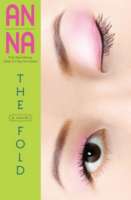
The Fold

Joyce never used to care that much about how she looked, but that was before she met JFK—John Ford Kang, the most gorgeous guy in school. And it doesn’t help that she’s constantly being compared to her beautiful older sister, Helen. Then her rich plastic-surgery-addict aunt offers Joyce a gift to “fix” a part of herself she’d never realized needed fixing—her eyes. Joyce has heard of the fold surgery—a common procedure meant to make Asian women’s eyes seem “prettier” and more “American”—but she’s not sure she wants to go through with it. Her friend Gina can’t believe she isn’t thrilled. After all, the plastic surgeon has shown Joyce that her new eyes will make her look just like Helen—but is that necessarily a good thing? Printz Award–winning author An Na has created a surprisingly funny and thought-provoking look at notions of beauty, who sets the standards and how they affect us all. Joyce’s decision is sure to spark heated discussions about the beauty myths readers confront in their own lives.

Featured in Volume I, Issue 4 of WOW Review.

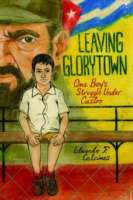
Leaving Glorytown: One Boy’s Struggle Under Castro

Eduardo F. Calcines was a child of Fidel Castro’s Cuba; he was just three years old when Castro came to power in January 1959. After that, everything changed for his family and his country. When he was ten, his family applied for an exit visa to emigrate to America and he was ridiculed by his schoolmates and even his teachers for being a traitor to his country. But even worse, his father was sent to an agricultural reform camp to do hard labor as punishment for daring to want to leave Cuba. During the years to come, as he grew up in Glorytown, a neighborhood in the city of Cienfuegos, Eduardo hoped with all his might that their exit visa would be granted before he turned fifteen, the age at which he would be drafted into the army. In this absorbing memoir, by turns humorous and heartbreaking, Eduardo Calcines recounts his boyhood and chronicles the conditions that led him to wish above all else to leave behind his beloved extended family and his home for a chance at a better future.

Featured in Volume I, Issue 4 of WOW Review.

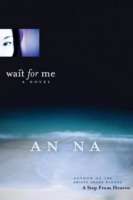
Wait For Me

Mina is the perfect daughter. Bound for Harvard, president of the honor society, straight A student, all while she works at her family’s dry cleaners and helps care for her hearing-impaired little sister. On the outside, Mina does everything right. On the inside, Mina knows the truth. Her life is a lie. At the height of a heat wave, the summer before her senior year, Mina meets the one person to whom she cannot lie. Ysrael, a young migrant worker who dreams of becoming a musician, comes to work at the dry cleaners and asks Mina the one question that scares her the most. What does she want? Mina finds herself torn between living her mother’s dreams, caring for her younger sister, grasping the love that Ysrael offers, and the most difficult of all, living a life that is true. With sensitivity and grace, An Na weaves an intriguing story of a young woman caught in the threads of secrets and lies, struggling for love and finding a voice of her own.

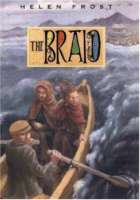
The Braid

Two sisters, Jeannie and Sarah, tell their separate yet tightly interwoven stories in alternating narrative poems. Each sister–Jeannie, who leaves Scotland during the Highland Clearances with her father, mother, and the younger children, and Sarah, who hides so she can stay behind with her grandmother–carries a length of the other’s hair braided with her own. The braid binds them together when they are worlds apart and reminds them of who they used to be before they were evicted from the Western Isles, where their family had lived for many generations.

An author’s note describes the poetic form in detail.

Featured in Vol. I, Issue 4 of WOW Review.

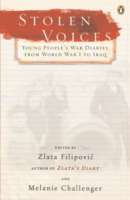
Stolen Voices: Young People’s War Diaries, from World War I to Iraq

Zlata Filipovic’s diary of her harrowing war experiences in the Balkans, published in 1993, made her a globally recognized spokesperson for children affected by military conflict. She and co-editor Melanie Challenger have gathered fifteen diaries of young people coping with war, from World War I to the struggle in Iraq that continues today. Profoundly affecting testimonies of shattered youth and the gritty particulars of war in the tradition of Anne Frank, this extraordinary collection— the first of its kind—is sure to leave a lasting impression on young and old readers alike.

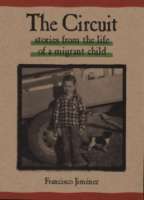
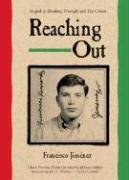
Reaching Out

The author describes the many challenges he faced as the son of Mexican American migrant workers during his quest to continue his education and become an academic success, overcoming poverty, family turmoil, guilt, and self-doubt.

This book is a sequel to The Circuit (1997) and Breaking Through (2001), which covered Mexican-born Jiménez’s childhood.

Featured in Volume I, Issue 4 of WOW Review.

Zlata’s Diary: A Child’s Life In Sarajevo

When Zlata’s Diary was first published at the height of the Bosnian conflict, it became an international bestseller and was compared to The Diary of Anne Frank, both for the freshness of its voice and the grimness of the world it describes. It begins as the day-today record of the life of a typical eleven-year-old girl, preoccupied by piano lessons and birthday parties. But as war engulfs Sarajevo, Zlata Filipovi´c becomes a witness to food shortages and the deaths of friends and learns to wait out bombardments in a neighbor’s cellar. Yet throughout she remains courageous and observant. The result is a book that has the power to move and instruct readers a world away.

Beneath My Mother’s Feet

“Our lives will always be in the hands of our mothers, whether we like it or not.” Nazia doesn’t mind when her friends tease and call her a good beti, a dutiful daughter. Growing up in a working-class family in Karachi, Pakistan, Nazia knows that obedience is the least she can give to her mother, who has spent years saving and preparing for her dowry. But every daughter must grow up, and for fourteen-year-old Nazia that day arrives suddenly when her father gets into an accident at work, and her family finds themselves without money for rent or food. Being the beti that she is, Nazia drops out of school to help her mother clean houses, all the while wondering when she managed to lose control of her life that had been full of friends and school. Working as a maid is a shameful obligation that could be detrimental to her future — after all, no one wants a housekeeper for a daughter-in-law. As Nazia finds herself growing up much too quickly, the lessons of hardship that seem unbearable turn out to be a lot more liberating than she ever imagined.

The Fighter

Fighting is a way of life for Moshe Wisniak. As a boy from a very poor neighborhood in Warsaw, he can’t run away when Polish kids attack the Jews, because his legs are weak. So he learns to use his fists, his head and other weapons to defend himself and his brothers. When the family moves to Paris in 1929, everyone finds work and life improves slowly. Moshe, now Maurice, is a leather worker and a young husband. At a Jewish sports club, he takes up boxing, and becomes an amateur flyweight. But the war comes to Paris, and by 1942, the French police round up foreign Jews and the Germans deport them by the hundreds every day. They send Maurice to the death camp at Auschwitz. In the camp, SS officers sense Maurice’s strength. They command him to box against a dying prisoner. Now Maurice is faced with an impossible moral dilemma: kill the prisoner or be killed by the SS for refusing to obey them. Translated from French by award-winning author Jean-Jacques Greif, The Fighter isn’t simply another book about the Holocaust. It is a book about a hero who discovers the death-defying power of his own humanity.

Take a closer look at The Fighter as examined in WOW Review.