
 Follow Jazmin Escalante, newly arrived in California from El Salvador, as she recounts her first days of school in America.
Americas
Materials from the Americas
Local News
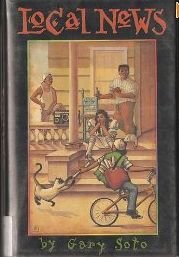 In thirteen stories full of wit and energy, Gary Soto illuminates the ordinary lives of young people. Meet Angel, who would rather fork over twenty bucks than have photos of his naked body plastered all over school; Philip, who discovers he has a “mechanical mind,” whatever that means; Estela, known as Stinger, who rules José’s heart and the racquetball court; and many other kids, all of them with problems as big as only a preteen can make them. Funny, touching, and wholly original, Local News is Gary Soto in top form.
The Birthday Swap
With her teenage sister’s birthday rapidly approaching, five-year-old Lori, a young Mexican-American girl, sets out to find the perfect gift for Cookie, only to end up with special surprise of her very own.
Dona Flor: A Tall Tale About A Giant Woman With A Great Big Heart (Pura Belpre Medal Book Illustrator (Awards))
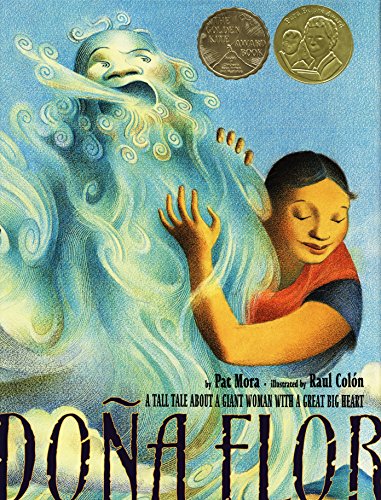 Doña Flor is a giant woman who lives in a puebla with lots of families. She loves her neighbors–she lets the children use her flowers for trumpets, and the families use her leftover tortillas for rafts. So when a huge puma is terrifying the village, of course Flor is the one to investigate. Featuring Spanish words and phrases throughout, as well as a glossary, Pat Mora’s story, along with Raúl Colón’s glorious artwork, makes this a treat for any reader, tall or small. Award-winning author Pat Mora’s previous book with Raúl Colón, Tomás and the Library Lady, received the Tomás Rivera Mexican American Children’s Book Award, an IRA Teacher’s Choice Award, a Skipping Stones Award, and was also named a Texas Bluebonnet Award Master List title and an Americas Award for Children’s and Young Adult Literature commended title. She lives in Santa Fe, New Mexico.
The Eyes Of The Weaver: Los Ojos Del Tejedor
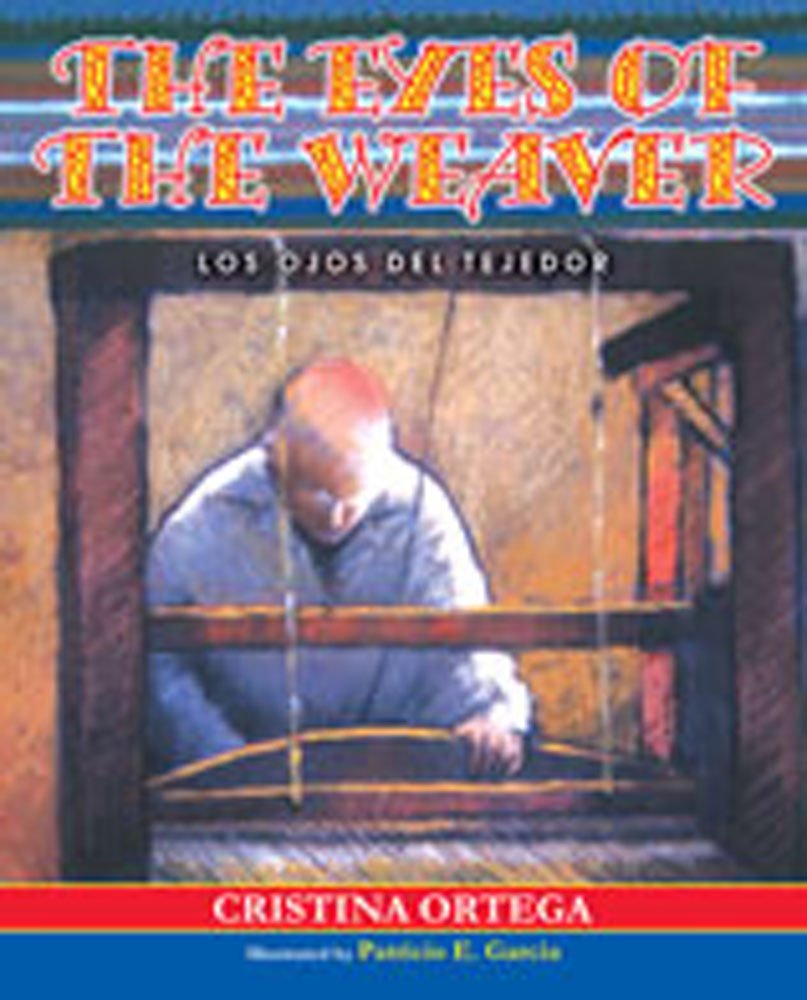 Cristina Ortega is the granddaughter of Juan Melquiades Ortega, a master weaver of northern New Mexico’s Chimayó Valley. Chimayó’s roots are in early Spanish Colonial times and has long been famous for its unique weavings. Juan M. Ortega was taught to weave by his father in the early days when weavers sheared their own sheep and spun and dyed the wool for their blankets. El Tejedor (The Weaver) continued weaving until he was one hundred years old, when his eyesight failed him. In The Eyes of the Weaver, Cristina shares her memories of visits when she was ten years old with Grandpa in the village of Chimayó, where he taught her how to weave. She also recalls how Grandma helped her husband choose color combinations for his Chimayó blankets. It was during these visits that Cristina learned how important it is for a child to listen to and learn from his or her relatives.Some of Juan M. Ortega’s weavings and tools of the trade have been included in the exhibit, “American Encounters,” at the National Museum of American History, Smithsonian Institution, in Washington, D.C.Reading level: 10 years and up
My Little Car
 Teresa loves to show off her shiny, new, pedal-powered lowrider car from Grandpa, but the toy soon looks old when she neglects it. When it helps her escape from a neighborhood dog, she is reminded of how much she loves it. And her grandpa is just the person to help her fix it up. After all, he’s old, too, but he’s still fun to play with. This shows kids that it’s important to take care of the things (and people) you love.
Growing Up with Tamales/Los Tamales De Ana (Spanish Edition)
“My name is Ana. Every year, my family makes tamales for Christmas. This year, I am six, so I get to mix the dough, which is made of cornmeal. My sister Lidia is eight, so she gets to spread the dough on the corn husk leaves. I wish I was eight, so that my hands would be big enough to spread the dough just right–not too thick and not too thin.” And so the years pass, and Ana turns eight, ten, twelve, fourteen, sixteen. But every year, big sister Lidia is always two years older. Ana envies her elder sibling and wishes she could do what Lidia does: put just the right amount of meat inside the tamales and roll them up; steam the tamales without scalding herself with the hot, hot steam; chop and cook the meat for the tamales without cutting or burning her hands. When she turns eighteen, though, Ana knows she will keep making tamales and she will be able to do all of the steps herself in her very own factory. When Christmas comes around, Ana will deliver tamales to all of her customers around the world, in delivery trucks that say “Ana’s Tamales.” And maybe Ana will even let Lidia work for her. Gwendolyn Zepeda’s rhythmic prose is combined with April Ward’s bright illustrations to create an affectionate and amusing story about sibling relationships that introduces an important Hispanic holiday tradition–making tamales!
The Too Precious Child
 Exposes the patterns and motives that lead parents to become too involved in their children’s lives, assesses the effects of their behavior on the family, and offers solutions to this problem
Henry Cisneros
 A biography of the Mexican-American mayor of San Antonio, Texas, who became the first Hispanic mayor of a major United States city in 1981.
Juan And The Jackalope: A Children’s Book In Verse
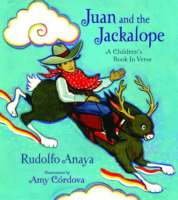
When Rosita, the loveliest gal in the Pecos River Valley, offers her delicious rhubarb pie as first prize for the Great Grasshopper Race, a thousand love-struck vaqueros line up for the competition. Of course everyone believes that the legendary cowboy Pecos Bill, riding his giant grasshopper, Hoppy, is a shoo-in for the grand prize. Sure enough, Bill and Hoppy give an impressive performance, crisscrossing the Southwest in a raucous ride. But young Juan, who is hopelessly in love with Rosita, astonishes them all when he and Jack the Jackalope take a miraculous ride around the world and across the Milky Way. The daring pair return, covered in stardust, to claim the beautiful Rosita and her delicious pie. Set in New Mexico, Anaya’s fanciful story, coupled with Amy Cordova’s vivid illustrations, brings the tradition of Southwestern tall tales to a new generation of young readers.