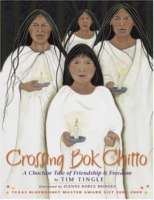
Crossing Bok Chitto: A Choctaw Tale of Friendship and Freedom

Kids of all ages are always asking Joe Hayes, “How can it snow tortillas?” Now they’ll know where to find the answer: at long last, Joe’s signature book The Day It Snowed Tortillas is appearing in a new bilingual edition. Bloomsbury Review listed the original English-only edition as one of their fifteen all-time favorite children’s books. This bilingual edition has all the original stories as they have evolved in the last twenty years of Joe’s storytelling. It also has new illustrations by award-winning artist Antonio Castro. Storytellers have been telling these stories in the villages of New Mexico since the Spanish first came to the New World over four hundred years ago, but Joe always adds his own nuances for modern audiences. The tales are full of magic and fun. In the title story, for instance, a clever woman saves her silly husband from a band of robbers. She makes the old man believe it snowed tortillas during the night! In another story, a young boy gladly gives up all of his wages for good advice. His parents think he is a fool, but the good advice leads to wealth and a royal marriage. The enchantment continues in story after story—a clever thief tricks a king for his kingdom and a prince finds his beloved in a house full of wicked step-sisters. And of course, we listen again to the ancient tale of the weeping woman, La Llorona, who still searches for her drowned children along the riverbanks.

Featured in Volume I, Issue 4 of WOW Review.

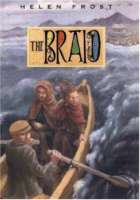
The Braid

Two sisters, Jeannie and Sarah, tell their separate yet tightly interwoven stories in alternating narrative poems. Each sister–Jeannie, who leaves Scotland during the Highland Clearances with her father, mother, and the younger children, and Sarah, who hides so she can stay behind with her grandmother–carries a length of the other’s hair braided with her own. The braid binds them together when they are worlds apart and reminds them of who they used to be before they were evicted from the Western Isles, where their family had lived for many generations.

An author’s note describes the poetic form in detail.

Featured in Vol. I, Issue 4 of WOW Review.

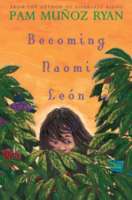
Becoming Naomi León

Naomi Soledad León Outlaw has had a lot to contend with in her young life, her name for one. Then there are her clothes (sewn in polyester by Gram), her difficulty speaking up, and her status at school as “nobody special.” But according to Gram’s self-prophecies, most problems can be overcome with positive thinking. Luckily, Naomi also has her carving to strengthen her spirit. And life with Gram and her little brother, Owen, is happy and peaceful. That is, until their mother reappears after seven years of being gone, stirring up all sorts of questions and challenging Naomi to discover who she really is.

Awards
Americas Award For Children’s And Young Adult Literature (Commended)

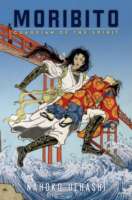
Guardian Of The Spirit (Moribito)

Balsa was a wanderer and warrior for hire. Then she rescued a boy flung into a raging river — and at that moment, her destiny changed. Now Balsa must protect the boy — the Prince Chagum — on his quest to deliver the great egg of the water spirit to its source in the sea. As they travel across the land of Yogo and discover the truth about the spirit, they find themselves hunted by two deadly enemies: the egg-eating monster Rarunga . . . and the prince’s own father.

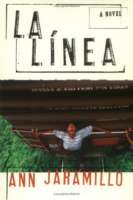
La Línea

When fifteen-year-old Miguel’s time finally comes to leave his poor Mexican village, cross the border without getting caught, and join his parents in California, his younger sister’s determination to join him imperils them both.

Take a closer look at La Línea as examined in WOW Review.

The Circuit

“‘La frontera’…I heard it for the first time back in the late 1940s when Papa and Mama told me and Roberto, my older brother, that someday we would take a long trip north, cross la frontera, enter California, and leave our poverty behind.” So begins this honest and powerful account of a family’s journey to the fields of California — to a life of constant moving, from strawberry fields to cotton fields, from tent cities to one-room shacks, from picking grapes to topping carrots and thinning lettuce. Seen through the eyes of a boy who longs for an education and the right to call one palce home, this is a story of survival, faith, and hope. It is a journey that will open readers’ hearts and minds.

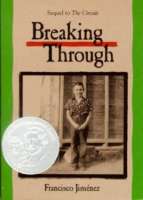
Breaking Through

At the age of fourteen, Francisco Jiménez, together with his older brother Roberto and his mother, are caught by la migra. Forced to leave their home, the entire family travels all night for twenty hours by bus, arriving at the U.S. and Mexican border in Nogales, Arizona. In the months and years that follow, Francisco, his mother and father, and his seven brothers and sister not only struggle to keep their family together, but also face crushing poverty, long hours of labor, and blatant prejudice. How they sustain their hope, their goodheartedness, and tenacity is revealed in this moving sequel to The Circuit. Without bitterness or sentimentality, Francisco Jiménez finishes telling the story of his youth.

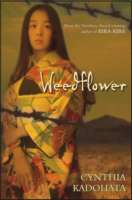
Weedflower

Twelve-year-old Sumiko feels her life has been made up of two parts: before Pearl Harbor and after it. The good part and the bad part. Raised on a flower farm in California, Sumiko is used to being the only Japanese girl in her class. Even when the other kids tease her, she always has had her flowers and family to go home to.

That all changes after the horrific events of Pearl Harbor. Other Americans start to suspect that all Japanese people are spies for the emperor, even if, like Sumiko, they were born in the United States! As suspicions grow, Sumiko and her family find themselves being shipped to an internment camp in one of the hottest deserts in the United States. The vivid color of her previous life is gone forever, and now dust storms regularly choke the sky and seep into every crack of the military barrack that is her new “home.”

Sumiko soon discovers that the camp is on an Indian reservation and that the Japanese are as unwanted there as they’d been at home. But then she meets a young Mohave boy who might just become her first real friend…if he can ever stop being angry about the fact that the internment camp is on his tribe’s land.

Weedflower is reviewed in WOW Review: Reading Across Cultures, Volume I, Issue 2.

The Best Eid Ever

It’s Eid, and Aneesa should be happy, but her parents are thousands of miles away in Saudi Arabia for the Hajj pilgrimage. To cheer her up, her grandmother gives her a gift of beautiful clothes from Pakistan, one outfit for each of the three days of Eid. She even prepares lamb korma, Aneesa’s favorite dinner, which they will enjoy when they return from prayers. At the prayer hall, Aneesa meets two sisters who are not dressed in new clothes for the holiday. Aneesa discovers that the girls are refugees. With their father, they have fled from their war-torn country. Aneesa can’t stop thinking about the girls and what Eid must be like for them. That’s when Aneesa comes up with a plan to help the girls celebrate Eid and make it the best Eid holiday ever.

The Secret Of Priest’s Grotto: A Holocaust Survival Story (Holocaust)

According to legend, a group of Jewish families survived the Holocaust by hiding out for months in the 77 miles of caves in Ukraine known as Priest’s Grotto. Cavers Taylor and Nicola chronicle their trip to explore the caves and uncover the story of the survivors.