
 When Lucita’s great-uncle Armando comes to live with them, he teaches her many truths about life.
Americas
Materials from the Americas
500 Years of Chicana Women’s History/Anos de Historia de las Chicanans
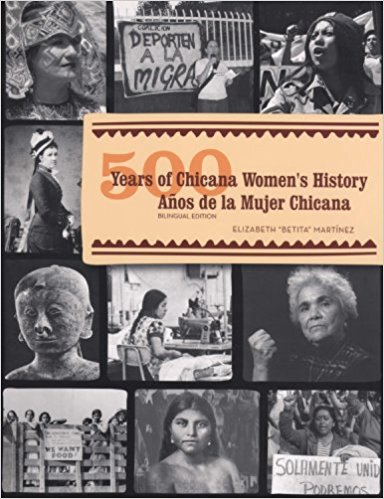 The history of Mexican Americans spans more than five centuries and varies from region to region across the United States. Yet most of our history books devote at most a chapter to Chicano history, with even less attention to the story of Chicanas. 500 Years of Chicana Women’s History offers a powerful antidote to this omission with a vivid, pictorial account of struggle and survival, resilience and achievement, discrimination and identity. The bilingual text, along with hundreds of photos and other images, ranges from female-centered stories of pre-Columbian Mexico to profiles of contemporary social justice activists, labor leaders, youth organizers, artists, and environmentalists, among others. With a distinguished, seventeen-member advisory board, the book presents a remarkable combination of scholarship and youthful appeal. In the section on jobs held by Mexicanas under U.S. rule in the 1800s, for example, readers learn about flamboyant Doña Tules, who owned a popular gambling saloon in Santa Fe, and Eulalia Arrilla de Pérez, a respected curandera (healer) in the San Diego area. Also covered are the “repatriation” campaigns” of the Midwest during the Depression that deported both adults and children, 75 percent of whom were U.S.-born and knew nothing of Mexico. Other stories include those of the garment, laundry, and cannery worker strikes, told from the perspective of Chicanas on the ground. From the women who fought and died in the Mexican Revolution to those marching with their young children today for immigrant rights, every story draws inspiration. Like the editor’s previous book, 500 Years of Chicano History (still in print after 30 years), this thoroughly enriching view of Chicana women’s history promises to become a classic.
Let’s Eat!/A Comer! (My Family: Mi Familia)
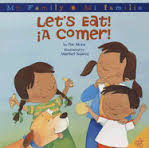
It’s dinnertime. Look at all the food! Es la hora de cenar. ¡Cuánta comida! There are beans, tortillas, Hay frijoles, tortillas, cheese, and even a green salad. queso y hasta una ensalada de lechuga. Enough for the whole family. Suficiente para toda la familia. Let’s sit down and enjoy it together. Vamos a sentarnos y disfrutarla juntos. Let’s eat! ¡A comer! This first book in the new bilingual My Family/Mi familia series will charm readers with its close-knit family—a family that is grateful for its many blessings. Éste es el primer libro de la nueva serie My Family/ Mi familia. Los lectores quedarán encantados con esta familia unida que se siente agradecida por todas sus bendiciones.
Sí, Puedes (Play Ball!)
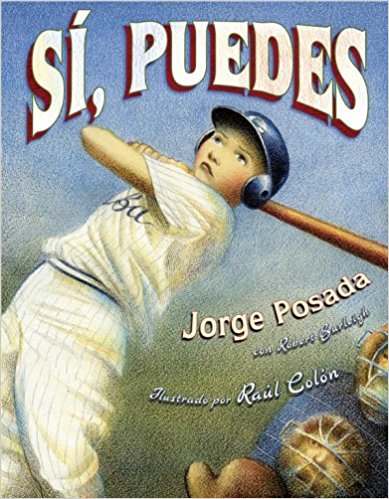 Presents a story of right-handed Jorge Posada being coached by his father to bat left-handed, and how it leads right to the major leagues.
Jorge Posada adora sentir la bola en su guante, el bate en su mano, y el juego del béisbol. Como cualquier otro jugador del equipo Casa Cuba, ya puede batear bien con la mano derecha, pero su padre le dice, “Ser bueno no es ser el mejor.”Su entrenador le dice, “El béisbol es un juego de pulgadas.” De hecho, cuando Casa Cuba tiene que enfrentarse al temible pítcher de Club Caparra, lo que el equipo más necesita es un jugador ambidiestro.Basado en la infancia de Jorge Posada, el cátcher de los New York Yankees, ésta es la historia de un niño puertorriqueño que trabajó duro para convertirse en el mejor, y no se detuvo sino hasta que llegó a ser campeón.
Las Abuelas De Liliana: Spanish Hardcover Edition Of Liliana’s Grandmothers (Spanish Edition)
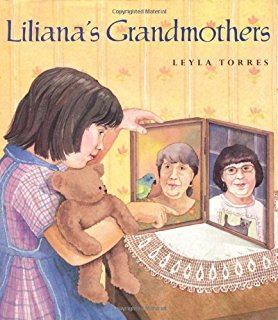 A gentle, loving look at grandmothers. In a book that will be officially published on Grandparents’ Day, a charming girl named Liliana describes how differently her grandmothers live their lives. Mima lives in New England, does yoga exercises, and likes crossword puzzles, for example. The other grandmother, Mama Gabina, lives in South America, enjoys gardening, and likes to dance around the house. The meals they cook are different, the stories they tell are different, but one thing about them is the same: they both love their granddaughter. And Liliana adores them. Leyla Torres’s watercolors show all the warmth and homeyness that are intrinsic in special family relationships.
Henry Cisneros: A Man Of The People (Romero, Maritza. Great Hispanics Of Our Time.)
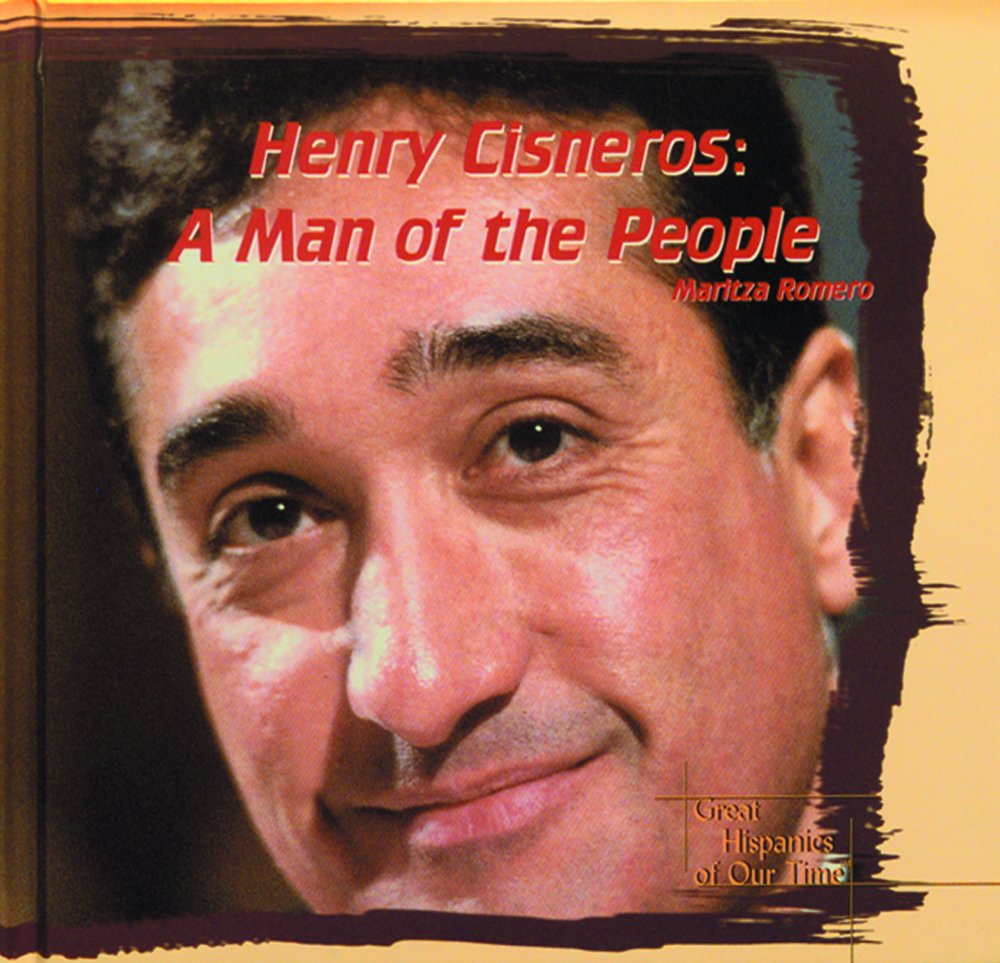 Focuses on the political life of a Mexican American who realized the importance of good leadership and served as a mayor and cabinet secretary.
Barrio: Jose’s Neighborhood
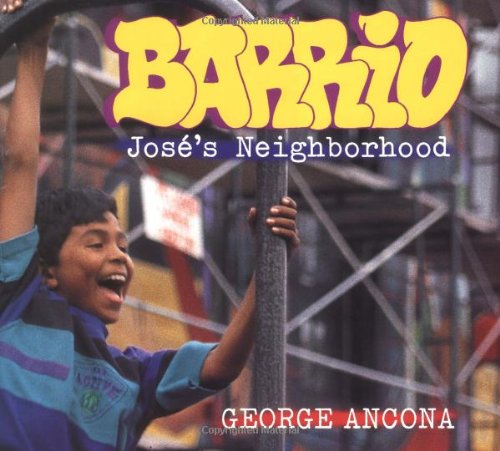 Welcome to José’s neighborhood. In his barrio, people speak an easy mix of Spanish and English and sometimes even Chinese. The masked revelry of Halloween leads into the festive remembrances of the Day of the Dead. And murals on the walls and buildings sing out the stories of the people who live here. As familiar as any neighborhood yet as strange as a foreign country, Jose’s barrio isn’t in Mexico or Argentina–it’s in San Francisco. Award-winning author and photographer George Ancona follows José through a season in the barrio, and in the process gives readers a glimpse of a community as rich and varied as America itself.
Frida Maria
 Two six-page gate folds and fresco-like paintings enhance the drama, and the fun, of the strong-willed Frida Maria’s preparations–with her horse, Diablo–for the fiesta, her attempts to please Mama by behaving properly, and her decision concerning a high-stakes race.
The Tequila Worm
Sofia comes from a family of storytellers. Here are her tales of growing up in the barrio in McAllen, Texas, full of the magic and mystery of family traditions: making Easter cascarones, celebrating el Dia de los Muertos, preparing for quinceañera, rejoicing in the Christmas nacimiento, and curing homesickness by eating the tequila worm. When Sofia is singled out to receive a scholarship to boarding school, she longs to explore life beyond the barrio, even though it means leaving her family to navigate a strange world of rich, privileged kids. It’s a different mundo, but one where Sofia’s traditions take on new meaning and illuminate her path.
El Lector
Thirteen-year-old Bella wants to be a lector just like her grandfather. All day long he sits on a special platform in the cigar factory in Ybor City, Florida, reading books, newspapers, and current events to workers as they roll the cigars. Lectors have always been highly respected members of their Cuban American community.But now times are changing. When the factory workers clash with the owners, violence erupts and the lectors start losing their jobs. And then there’s the radio. Could this small device replace the lector? It’s up to Bella to determine her future and help her people preserve their history.