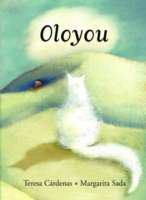
Oloyou (Libro Tigrillo)

Oloyou the Cat, the very first creature that the God-child creates, is also the very first friend. God-child and Oloyou play together for hours on end, until one day the cat falls into the void and lands in the dark, featureless, sea kingdom of ferocious Okún Aró. Oloyou is terribly lonely until he meets Aró’s mermaid daughter and falls madly in love. Infuriated, the father flings the pair into the heavens, where they become an everlasting part of the night sky. This imaginative tale, sparked by the author’s mesmerizing text, is the perfect introduction to the vibrant Santería/Yoruba culture.
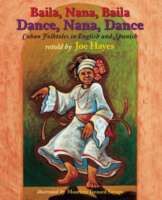
Dance, Nana, Dance / Baila, Nana, Baila: Cuban Folktales In English And Spanish

If you travel to Cuba, the people will greet you with a smile. Right away they’ll want you to come to their home and eat a meal. In the meal, you’ll find a mixture of foods and flavors from Spain and Africa-and from many Caribbean cultures as well. In Cuban folktales, you will taste the same delicious mixture of flavors.Folklorist and storyteller Joe Hayes first visited Cuba in 2001. He fell in love with the island and its people and began to look for opportunities to meet and listen to Cuban storytellers and to share the stories he knew from the American Southwest. He has returned every year, establishing a rich cultural exchange between US and Cuban storytellers. Out of that collaboration came this savory collection of Cuban folktales, which Joe frames with an introduction and an all-important Note to Storytellers.Joe Hayes is one of America’s premier storytellers. His bilingual Spanish-English tellings have earned him a distinctive place among America’s storytellers. Joe has published over twenty books. He lives in Santa Fe, New Mexico, and travels extensively throughout Texas, New Mexico, Arizona, and California.Mauricio Trenard Sayago was born in Santiago de Cuba in 1963. He was raised in a home that was closely linked with art and was surrounded by the artistic debates sustained by the various artists and art history professors in his family. This environment strongly influenced him. Mauricio came to the United States in 2000, and now lives in Brooklyn.

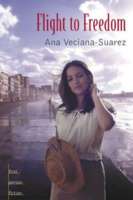
Flight to Freedom

In Flight to Freedom, Anna Veciana-Suarez brings us Yara, an eighth-grader who lives in a middle-class neighborhood of 1967 Havana, Cuba. Her parents, who do not share the political beliefs of the Communist party, finally are forces to flee Cuba with their children to Miami, Florida. There, Yara records in her diary the difficulties she encounters in a strange land with foreign customs. She must learn English and go to school with new children. Her parents also adjust to the new country differently, and Yara’s father grows frustrated with her mother when she becomes more independent.

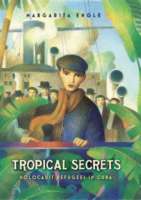
Tropical Secrets: Holocaust Refugees in Cuba

Daniel has escaped Nazi Germany with nothing but a desperate dream that he might one day find his parents again. But that golden land called New York has turned away his ship full of refugees, and Daniel finds himself in Cuba. As the tropical island begins to work its magic on him, the young refugee befriends a local girl with some painful secrets of her own. Yet even in Cuba, the Nazi darkness is never far away . . .

See the review at WOW Review, Volume 3, Issue 2

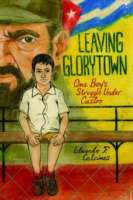
Leaving Glorytown: One Boy’s Struggle Under Castro

Eduardo F. Calcines was a child of Fidel Castro’s Cuba; he was just three years old when Castro came to power in January 1959. After that, everything changed for his family and his country. When he was ten, his family applied for an exit visa to emigrate to America and he was ridiculed by his schoolmates and even his teachers for being a traitor to his country. But even worse, his father was sent to an agricultural reform camp to do hard labor as punishment for daring to want to leave Cuba. During the years to come, as he grew up in Glorytown, a neighborhood in the city of Cienfuegos, Eduardo hoped with all his might that their exit visa would be granted before he turned fifteen, the age at which he would be drafted into the army. In this absorbing memoir, by turns humorous and heartbreaking, Eduardo Calcines recounts his boyhood and chronicles the conditions that led him to wish above all else to leave behind his beloved extended family and his home for a chance at a better future.

Featured in Volume I, Issue 4 of WOW Review.

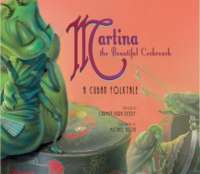
Martina the Beautiful Cockroach: A Cuban Folktale

Carmen Agra Deedy delivers a deliciously inventive Cuban version of the beloved Martina folktale, complete with a dash of café cubano.

Martina the beautiful cockroach doesn t know coffee beans about love and marriage. That s where her Cuban family comes in. While some of the Cucarachas offer her gifts to make her more attractive, only Abuela, her grandmother, gives her something really useful: un consejo increible, some shocking advice.

You want me to do what? Martina gasps.

At first, Martina is skeptical of her Abuela s unorthodox suggestion, but when suitor after suitor fails The Coffee Test, she wonders if a little green cockroach can ever find true love. Soon, only the gardener Pérez, a tiny brown mouse, is left. But what will happen when Martina offers him café Cubano?

After reading this sweet and witty retelling of the Cuban folktale, you ll never look at a cockroach the same way again.

Celia Cruz, Queen of Salsa

Celia Cruz is the Queen of Salsa. She enjoyed singing and sings songs to her siblings when she was younger. In high school, she sang Afro-Cuban rhythms in local clubs. Then she was hired as lead singer for Cuba’s most popular band, La Sonora Matancera, and together they created a new style of Latin dance music. She left Cuba and started her singing career in the United States. She continues to sing over 49 years.creat

The Dog Who Loved the Moon

When her dog becomes lovesick for the moon, a young Cuban girl and her uncle call the moon down to give the dog a kiss, with surprising results.

The Poet Slave of Cuba: A Biography of Juan Francisco Manzano

A lyrical biography of a Cuban slave who escaped to become a celebrated poet. Born into the household of a wealthy slave owner in Cuba in 1797, Juan Francisco Manzano spent his early years by the side of a woman who made him call her Mama, even though he had a mama of his own. Denied an education, young Juan still showed an exceptional talent for poetry. His verses reflect the beauty of his world, but they also expose its hideous cruelty.  Powerful, haunting poems and breathtaking illustrations create a portrait of a life in which even the pain of slavery could not extinguish the capacity for hope.

Featured in Volume I, Issue 1 of WOW Review.