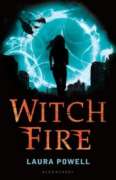
In an alternate London, where witches are registered and allowed to practice, Lucas and Glory, young members of WICA (Witchkind Intelligence and Covert Affairs), are assigned to infiltrate the witch-terrorist organization called Endor but what Glory really wants is to solve the mystery of her missing mother.
Family
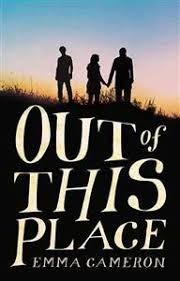
Out of This Place
Luke spends his days hanging out at the beach, working shifts at the local supermarket, and trying to stay out of trouble at school. His mate Bongo gets wasted, blocking out memories of the little brother that social services took away from his addict mom and avoiding the stepdad who hits him. And Casey, the girl they both love, longs to get away from her strict, controlling father and start anew in a place where she can be free. Set in Australia and narrated in alternating points of view, here is an affecting look at the evolving lives of three friends.
Shadow Girl
This novel for ages nine and up is the story of a resilient young girl who struggles as the daughter of an alcoholic father and an absentee mother. Left alone to fend for herself for days at a time, she is observed by a kind and compassionate saleswoman at the mall she retreats to every day after school to avoid going “home.” The saleswoman gains her trust and takes action into her own hands by reporting the girl’s situation to social services. She is placed in foster care, where she dreams of being reunited with her dad, despite the deprivations in her life with him. The relationship between the girl and her foster mother is painful, and the girl’s spirit disintegrates. Eventually, the saleswoman “adopts” the girl into her caring family, whose love and support enable her, finally, to believe in herself.
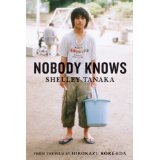
Nobody Knows
It’s autumn in Tokyo, and twelve-year-old Akira and his younger siblings, Kyoko, Shige and little Yuki, have just moved into a new apartment with their mother. Akira hopes it’s a new start for all of them, even though the little ones are not allowed to leave the apartment or make any noise, since the landlord doesn’t permit young children in the building. But their mother soon begins to spend more and more time away from the apartment, and then one morning Akira finds an envelope of money and a note. She has gone away with her new boyfriend for a while. Akira bravely shoulders the responsibility for the family. He shops and cooks and pays the bills, while Kyoko does the laundry. The children spend their time watching TV, drawing and playing games, wishing they could go to school and have friends like everyone else. Then one morning their mother breezes in with gifts for everyone, but she is soon gone again. Months pass, until one spring day Akira decides they have been prisoners in the apartment long enough. For a brief time the children bask in their freedom. They shop, explore, plant a little balcony garden, have the playground to themselves. Even when the bank account is empty and the utilities are turned off and the children become increasingly ill-kempt, it seems that they have been hiding for nothing. In the bustling big city, nobody notices them. It’s as if nobody knows. But by August the city is sweltering, and the children are too malnourished and exhausted even to go out. Akira is afraid to contact child welfare, remembering the last time the authorities intervened, and the family was split up. Eventually even he can’t hold it together any more, and then one day tragedy strikes…

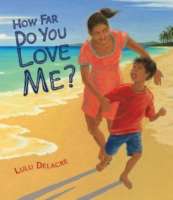
How Far Do You Love Me?
Messages of love between children and adults are framed in the language of the natural world spanning different cultures and all thirteen different locations in seven continents around the world, each a beautifully illustrated scene of adults and children in a place of natural beauty.
Floating on Mama’s Song
A seven-year-old girl is amazed when her mother’s singing suddenly begins to make her listeners float, but Grandma says she must stop, making Mama terribly sad until her daughter makes her smile again.
See the review at WOW Review, Volume 5, Issue 3
Lessons from Hu’ul Ke
How a young boy is raised by his grandfather on the Tohono O’odham Indian Reservation. The book denotes various aspects of O’odham himdag (culture) and begins with a simple question that the boy asks his Hu’ul Ke:li (Grandfather) with a culturally relevant answer as to why they do the things they do during the day. Various activities include waking up early in the morning and asking why they do so – to daily chores and activities such as tending horses, working in the garden, hauling water, and gathering food/medicine in the desert.
Funny in Farsi
This new Readers Circle edition includes a reading group guide and a conversation between Firoozeh Dumas and Khaled Hosseini, author of The Kite Runner.” In 1972, when she was seven, Firoozeh Dumas and her family moved from Iran to Southern California, arriving with no firsthand knowledge of this country beyond her father’s glowing memories of his graduate school years here. More family soon followed, and the clan has been here ever since. Funny in Farsi chronicles the American journey of Dumas’s wonderfully engaging family: her engineer father, a sweetly quixotic dreamer who first sought riches on Bowling for Dollars and in Las Vegas, and later lost his job during the Iranian revolution; her elegant mother, who never fully mastered English (nor cared to); her uncle, who combated the effects of American fast food with an army of miraculous American weight-loss gadgets; and Firoozeh herself, who as a girl changed her name to Julie, and who encountered a second wave of culture shock when she met and married a Frenchman, becoming part of a one-couple melting pot. In a series of deftly drawn scenes, we watch the family grapple with American English (hot dogs and hush puppies?—a complete mystery), American traditions (Thanksgiving turkey?—an even greater mystery, since it tastes like nothing), and American culture (Firoozeh’s parents laugh uproariously at Bob Hope on television, although they don’t get the jokes even when she translates them into Farsi).Above all, this is an unforgettable story of identity, discovery, and the power of family love. It is a book that will leave us all laughing—without an accent.
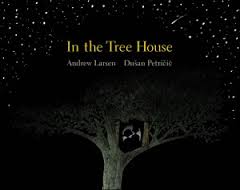
In the Tree House
An evocative story about two brothers who are growing up (one faster than the other), an unusual summer night and a special tree house that proves childhood is not just a time but also a place.
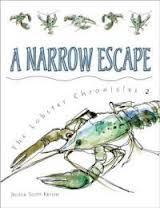
The Lobster Chronicles: A Narrow Escape
Inspired by urban visionary Jane Jacobs, seven-year-old Lucia takes the reader through a day in her neighborhood and celebrates the people and places that make it feel like home. A great starting point for discussions on cities, this book will encourage readers to stop and smell the urban roses.