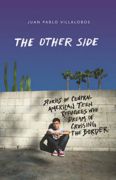
The Other Side: Stories Of Central American Teen Refugees Who Dream Of Crossing The Border

Every year, thousands of migrant children and teens cross the U.S.-Mexico border. The journey is treacherous and sometimes deadly, but worth the risk for migrants who are escaping gang violence and poverty in their home countries. And for those refugees who do succeed? They face an immigration process that is as winding and multi-tiered as the journey that brought them here. In this book, award-winning Mexican author Juan Pablo Villalobos strings together the diverse experiences of eleven real migrant teenagers, offering readers a beginning road map to issues facing the region. These timely accounts of courage, sacrifice, and survival―including two fourteen-year-old girls forming a tenuous friendship as they wait in a frigid holding cell, a boy in Chicago beginning to craft his future while piecing together his past in El Salvador, and cousins learning to lift each other up through angry waters―offer a rare and invaluable window into the U.S.–Central American refugee crisis. In turns optimistic and heartbreaking, The Other Side balances the boundless hope at the center of immigration with the weight of its risks and repercussions. Here is a necessary read for young people on both sides of the issue.

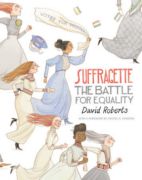
Suffragette

Imprisonment, hunger strikes, suffrajitsu — the decades-long fight for women’s right to vote was at times a ferocious one. Acclaimed artist David Roberts gives these important, socially transformative times their due in a colorfully illustrated history that includes many of the important faces of the movement in portraiture and scenes that both dignify and enliven. He has created a timely and thoroughly engaging resource in his first turn as nonfiction author-illustrator. Suffragette: The Battle for Equality follows the trajectory of the movement in the U.K. and visits some key figures and moments in the United States as it presents the stories of Millicent Garrett Fawcett, Emmeline Pankhurst, Ida B. Wells, Susan B. Anthony, and many more heroic women and men — making it a perfect gift for young readers of today. Dr. Crystal Feimster of Yale’s Department of African American Studies contributes a foreword that speaks to the relationship and differences between the British and American suffrage efforts.

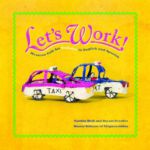
Let’s Work

Cynthia Weill scores again with an early concept book that bring every kind of job to life, including the work of the dedicated palm weavers of Flavio Gallardo’s workshop, whose miniature palm weavings illustrate this playful book, teaching children words for work in two languages. The weavers live in the village of Chigmecatitlán in the Mixteca part of the Mexican state of Puebla. With tremendous skill and patience, the artisans of this region practice palm weaving, a craft which came to Mexico even before the arrival of the Spanish in the early 15th century. Imagine being able to hold all of the illustrations in one book in the palms of your hands. You can do that with the tiny weavings in Let’s Work. Most pieces are no larger than a dime!

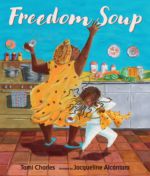
Freedom Soup

Every year, Haitians all over the world ring in the new year by eating a special soup, a tradition dating back to the Haitian Revolution. This year, Ti Gran is teaching Belle how to make the soup — Freedom Soup — just like she was taught when she was a little girl. Together, they dance and clap as they prepare the holiday feast, and Ti Gran tells Belle about the history of the soup, the history of Belle’s family, and the history of Haiti, where Belle’s family is from. In this celebration of cultural traditions passed from one generation to the next, Jacqueline Alcántara’s lush illustrations bring to life both Belle’s story and the story of the Haitian Revolution. Tami Charles’s lyrical text, as accessible as it is sensory, makes for a tale that readers will enjoy to the last drop.

Charcoal Boys

While making a mud house for her hornet egg, a wasp follows a human child thoughout his day as he works in a Brazilian charcoal mine.

Encounter

Based on the real journal kept by French explorer Jacques Cartier in 1534, Encounter imagines a first meeting between a French sailor and a Stadaconan fisher. As they navigate their differences, the wise animals around them note their similarities, illuminating common ground. This extraordinary imagining by Brittany Luby, Professor of Indigenous History, is paired with stunning art by Michaela Goade, winner of 2018 American Indian Youth Literature Best Picture Book Award. Encounter is a luminous telling from two Indigenous creators that invites readers to reckon with the past, and to welcome, together, a future that is yet unchartered.

The Pencil

Susan and her sister, Rebecca, love watching their mother write letters to people in other camps. Their mother has one precious pencil, and she keeps it safe in her box for special things. One afternoon, their mother leaves the iglu to help a neighbour, and Susan, Rebecca, and their brother Peter are left with their father. They play all their regular games but are soon out of things to do―until their father brings out the pencil! As Susan draws and draws, the pencil grows shorter and shorter. What will their mother think when she comes home? Based on author Susan Avingaq’s childhood memories of growing up in an iglu, this charming story introduces young readers to the idea of using things wisely.

When Julia Danced Bomba

Young Julia struggles with the steps to the Afro-Puerto Rican dance known as bomba, but when she stops trying so hard and listens and feels the beat of the drums, she is able to relax, enjoy herself, and do the steps perfectly.

Vincent Ventura and the Mystery Of the Witch Owl

Convinced that his new neighbor, Zulema Ortiz, is a witch owl, Vincent persuades his cousins Michelle and Bobby to help solve the puzzle–while denying he has a crush on Zulema.