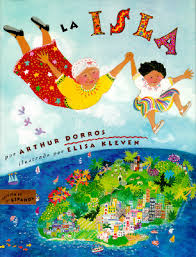
When Rosalba and Abuela travel to la isla, the island where Abuela grew up, Rosalba meets Abuela’s son, Fernando, and his family and samples the sights of the island. By the creators of Abuela.

Materials from United States of America
When Rosalba and Abuela travel to la isla, the island where Abuela grew up, Rosalba meets Abuela’s son, Fernando, and his family and samples the sights of the island. By the creators of Abuela.
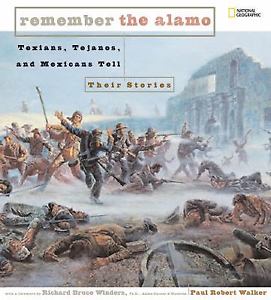 An account of the famous battle of the Alamo which presents different points of view of the event.

As a Chicano boy living in the unglamorous town of Hollywood, New Mexico, and a member of the graduating class of 1969, Sammy Santos faces the challenges of “gringo” racism, unpopular dress codes, the Vietnam War, barrio violence, and poverty.
“They never thought I would leave. I remember tia Olivia calling the house to let me know that I was betraying my family by leaving to study. But unlike both of my parents, I wasn’t leaving the country to let years pass before seeing my family again; and unlike my mother, I wasn’t leaving to get married.” In this short but powerful memoir, Marisol explains that she knew her departure for Yale would create conflict with her family, but she is surprised that her leaving leads to a bond with her parents that she could never have imagined. Marisol is one of thirty-six Latinos whose writings are included in this collection. They all uniquely document their struggles with the issues that young people encounter–friendship, death, anorexia, divorce, sexuality–but added to these difficulties are those specific to their ethnicity, such as adjusting to a new culture and language, and handling familial and cultural expectations that can limit their hopes and dreams but just as often enrich their lives. In one piece, a young woman muses about the safety in the hills of her native Honduras compared to the flat expanse of her new homeland: “When I venture back into these silver hills, no one can see where I’ve gone because of the curves of the winding streets. But when I walk the flat roads of America, people can watch me go, trace my path and witness the inevitable stumble.” These short essays written by young men and women from various Latino backgrounds–Mexican American, Puerto Rican, Dominican, Salvadoran–reflect the diversity of growing up Latino in the United States. Whether from a gay or straight, urban or rural, recent immigrant or third generation perspective, these illuminating pieces of memoir shine a light into the lives of young Hispanic adults.

Henry liked to imagine his life began that cold rainy day in San Francisco when Mr. Earnshaw found him shivering by the side of the road. That was the day Henry met Catherine. For Henry, Catherine is like a precious gift. She pushes away his angry thoughts and makes him feel safe and calm. And though Mr. Earnshaw, a widow, raises the orphan and Catherine as brother and sister, their love for each other goes much deeper. They vow to always be together. But everything changes when Mr. Earnshaw dies suddenly and Hindley, Mr. Earnshaw’s own son, gains control of the family finances. Furiously jealous, Hindley never accepted Henry as a true member of the family. He works to sever Henry’s relationship with Catherine and the violent rage Henry has harbored since he was a child bubbles to the surface. . . . Contemporizing the classic novel, Wuthering Heights, notable YA author, Brian James delives into the dark nature of obsessive love, the social injustices of class, and the self-destructive power of revenge in this emotionally raw unforgettable offering.
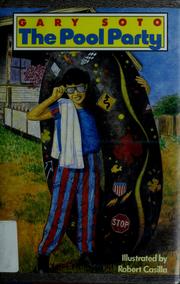 Invited to Tiffany Perez’s pool party, Rudy Herrara longs to make a big impression on Tiffany and his classmates. By the author of Living up the Street.
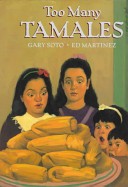
While preparing dough for her family’s Christmas tamales, Maria discovers that she has lost her mother’s prized diamond ring somewhere in the dough and sets out to eat her way through the many finished tamales to find the missing ring.
Offers a collection of poems in English and Spanish that tell of a young Mexican-American girl’s dream to overcome her family difficulties and economic hardships in order for her to achieve her goal of becoming a teacher.
Once upon a time, in a land far away…These stories have journeyed far — over mountains, deserts, and oceans — carried by wind, passed on to us by our ancestors. Now they have found their way to you.A sly fox, a bird of a thousand colors, a magical set of bagpipes, and an audacious young girl…A mixture of popular tales and literary lore, this anthology celebrates Hispanic culture and its many roots — Indigenous, African, Arab, Hebrew, and Spanish.F. Isabel Campoy and Alma Flor Ada have retold twelve beloved stories that embody the lively spirit and the rich heritage of Latino people.The work of four leasing Latino artists and illustrators highlights this unforgettable collection.
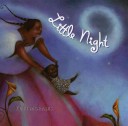
As the long day comes to an end, Mother Sky fills a tub with falling stars and calls, “Bath time for Little Night!” Little Night answers from afar, “Can’t come. I am hiding and you have to find me, Mama. Find me now!” Where could Little Night be? Down a rabbit hole? In a blueberry field? Among the stripes of bees? Exquisitely painted and as gentle as Little Night’s dress crocheted from clouds, this is a story to treasure.