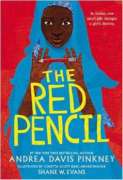
The Red Pencil

After her tribal village is attacked by militants, Amira, a young Sudanese girl, must flee to safety at a refugee camp, where she finds hope and the chance to pursue an education in the form of a single red pencil and the friendship and encouragement of a wise elder.

Featured in WOW Review Volume IX, Issue 2.

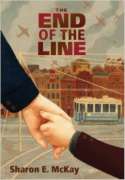
End Of the Line

Five-year-old Beatrix looks on in horror as the soldier forces her mother off the tram. It is 1942 in Amsterdam, and everyone knows what happens to Jews who are taken away by the Nazis. The soldier turns his attention to Beatrix, when suddenly, the ticket-taker, Lars Gorter, blurts out that she is his niece. With his brother Hans, the tram conductor, they manage to rescue the child from the same fate as her mother.The two elderly brothers realize that they are now in charge of the little girl. They are at a loss, after all, neither one has ever married, let alone has children. They know that harboring a Jew could cost them their lives, but in desperation, they turn to a neighbor, Mrs. Vos, for help. But even these kindly rescuers cannot shield Beatrix totally from the horrors of war.

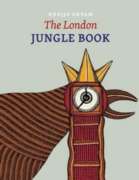
The London Jungle Book

The book is a visual travelogue that both mimics and subverts the typical colonial encounter. With radical innocence and great sophistication, Bhajju brings the signs of the Gond forest to bear on the city, turning London into an exotic jungle, a clever beastiary. The London Underground becomes a sinuous snake, Big Ben transforms into a rooster crowing the time, and an airplane — the first Bhajju ever encountered — is compared to an elephant miraculously flying through the air. It is rare to encounter a truly original vision that is capable of startling us into reexamining familiar sights. By breathing the ancient spirit of wonder back into the act of travel, The London Jungle Book does just that.

See the review at WOW Review, Volume VII, Issue 4

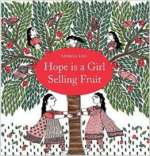
Hope is a Girl Selling Fruit

On a train journey to a large city, a young woman notices a very poor girl. Who is she? Where is she going? What does her future hold? Hope Is a Girl Selling Fruit is a gentle, reflective account of a young woman’s thoughts and feelings as she comes into contact with the larger world. The rich imagery takes the story into another realm, inviting the reader to interpret it at many levels. Young Indian artist Amrita Das pushes the boundaries of her traditional art to radical new ends as she muses on women’s mobility, class, and choices.

See the review at WOW Review, Volume 8, Issue 3

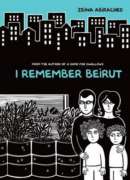
I Remember Beirut

Zeina Abirached grew up in Beirut in the 1980s as fighting between Christians and Muslims divided the city streets. With striking black-and-white artwork, Abirached recalls the details of ordinary life inside a war zone.

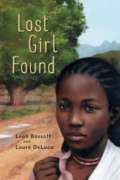
Lost Girl Found

For Poni, life in her small village in southern Sudan is simple and complicated at the same time. But then the war comes and there is only one thing for Poni to do. Run. Run for her life. Driven by the sheer will to survive and the hope that she can somehow make it to the Kakuma refugee camp in Kenya, Poni sets out on a long, dusty trek across the east African countryside with thousands of refugees. In Kakuma she is almost overwhelmed by the misery that surrounds her. Poni realizes that she must leave the camp at any cost. Her destination is a compound in Nairobi. There, if she is lucky, she can continue her education and even one day convince authorities that she is worthy to go to the land of opportunity called America. Even more than the dramatic events of the story, it is Poni’s frank and single-minded personality that carries this novel. In a heartbreaking final twist, she finds her mother just as she is about to leave for the U.S., and must make the hardest decision of all.

Featured in WOW Review Volume X, Issue 4.

Beyond the Door

When mythical creatures appear, a mystery of unparalleled proportions begins to unfold for Timothy, his sister Sarah, and school bully Jessica, who must defeat the powers of the Darkness.

See the review at WOW Review, Volume VII, Issue 3

The Telling Stone

Timothy James, his sister Sarah, and their friend Jessica race against time and an ancient Evil to save their mother and restore peace and harmony to the Travelers Market. Includes glossary and a map with a code for readers to decipher.

See the review at WOW Review, Volume VII, Issue 3

Barbarians!

The ancient Romans used the word barbarian to describe people who were coarse, rude, or even just foreign. Over time the word has also come to connote bloodthirsty cruelty. But were the Goths, the Huns, the Vikings, and the Mongols as barbaric as we’ve been led to believe? In dynamic, detailed spreads that young readers will pore over, this book explores how these nomadic warriors lived, worshipped, and celebrated. Their wandering armies brought together Europe and Asia through trade and conquest and, in doing so, changed the world forever.