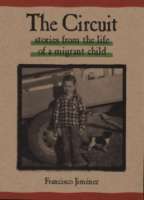
At the age of fourteen, Francisco Jiménez, together with his older brother Roberto and his mother, are caught by la migra. Forced to leave their home, the entire family travels all night for twenty hours by bus, arriving at the U.S. and Mexican border in Nogales, Arizona. In the months and years that follow, Francisco, his mother and father, and his seven brothers and sister not only struggle to keep their family together, but also face crushing poverty, long hours of labor, and blatant prejudice. How they sustain their hope, their goodheartedness, and tenacity is revealed in this moving sequel to The Circuit. Without bitterness or sentimentality, Francisco Jiménez finishes telling the story of his youth.
United States
Materials from United States of America
Grandma And Me At The Flea / Los Meros Meros Remateros
Every Sunday Juanito helps his grandmother sell old clothes at the flea market. Romping from booth to booth among the rainbow-colored tents under the sun, Juanito and his friends fulfill Grandma’s vision of the flea market as a sharing community of friendly give and take. With every trade and barter, Juanito learns firsthand what it means to be a true rematero — a flea marketeer — and discovers that the value of community can never be measured in dollars.
Featured in Volume I, Issue 3 of WOW Review.
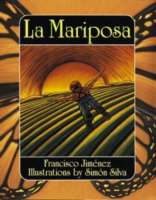
La Mariposa
In his first year of school, Francisco understands little of what his teacher says. But he is drawn to the silent, slow-moving caterpillar in the jar next to his desk. He knows caterpillars turn into butterflies, but just how do they do it? To find out, he studies the words in a butterfly book so many times that he can close his eyes and see the black letters, but he still can’t understand their meaning. Illustrated with paintings as deep and rich as the wings of a butterfly, this honest, unsentimental account of a schoolchild’s struggle to learn language reveals that our imaginations powerfully sustain us. La Mariposa makes a subtle plea for tolerance in our homes, our communities, and in our schools.
This book has been included in WOW’s Language and Learning: Children’s and Young Adult Fiction Booklist. For our current list, visit our Booklist page under Resources in the green navigation bar.
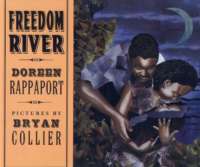
Freedom River
Describes an incident in the life of John Parker, a formerly enslaved person who became a successful businessman in Ripley, Ohio, and who repeatedly risked his life to help other slaves escape to freedom.
Coretta Scott King Illustrator Honor Books
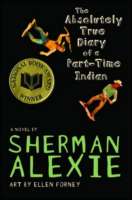
The Absolutely True Diary of a Part-Time Indian
In his first book for young adults, bestselling author Sherman Alexie tells the story of Junior, a budding cartoonist growing up on the Spokane Indian Reservation. Determined to take his future into his own hands, Junior leaves his troubled school on the rez to attend an all-white farm town high school where the only other Indian is the school mascot. Heartbreaking, funny, and beautifully written, The Absolutely True Diary of a Part-Time Indian, which is based on the author’s own experiences, coupled with poignant drawings by acclaimed artist Ellen Forney, that reflect the character’s art, chronicles the contemporary adolescence of one Native American boy as he attempts to break away from the life he was destined to live.
Featured in Volume I, Issue 2 of WOW Review.
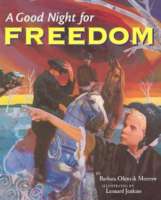
A Good Night For Freedom
Hallie discovers two runaway slaves hiding in Levi Coffin’s house and must choose between protecting herself and her family or helping the two strangers she’s only just met.
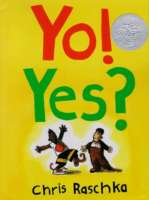
Yo! Yes (Caldecott Honor Book)
With a mere 19 words (yo appears twice, yes six times) the author/artist of Charlie Parker Played Be Bop presents a spirited conversation on a city sidewalk that is, in itself, a complete drama. Two boys meet as strangers. One hails the other, who is cautious. The first persists. The other responds. Gradually they begin to talk and end up as friends. Full color. 1994 Caldecott Honor Book.
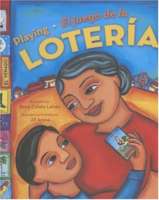
Playing Loteria / El juego de la loteria
A boy has a good time attending a fair with his grandmother in San Luis de La Paz, Mexico, as she teaches him Spanish words and phrases and he teaches her English.
Read more about Playing Loteria in Volume 1, Issue 3 of WOW Review: Reading Across Cultures.
This book has been included in WOW’s Language and Learning: Children’s and Young Adult Fiction Booklist. For our current list, visit our Booklist page under Resources in the green navigation bar.
Featured in August 2023’s WOW Dozen for books about Language Learning and Communication.
Reaching Out
The author describes the many challenges he faced as the son of Mexican American migrant workers during his quest to continue his education and become an academic success, overcoming poverty, family turmoil, guilt, and self-doubt.
This book is a sequel to The Circuit (1997) and Breaking Through (2001), which covered Mexican-born Jiménez’s childhood.
Featured in Volume I, Issue 4 of WOW Review.
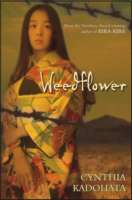
Weedflower
Twelve-year-old Sumiko feels her life has been made up of two parts: before Pearl Harbor and after it. The good part and the bad part. Raised on a flower farm in California, Sumiko is used to being the only Japanese girl in her class. Even when the other kids tease her, she always has had her flowers and family to go home to.
That all changes after the horrific events of Pearl Harbor. Other Americans start to suspect that all Japanese people are spies for the emperor, even if, like Sumiko, they were born in the United States! As suspicions grow, Sumiko and her family find themselves being shipped to an internment camp in one of the hottest deserts in the United States. The vivid color of her previous life is gone forever, and now dust storms regularly choke the sky and seep into every crack of the military barrack that is her new “home.”
Sumiko soon discovers that the camp is on an Indian reservation and that the Japanese are as unwanted there as they’d been at home. But then she meets a young Mohave boy who might just become her first real friend…if he can ever stop being angry about the fact that the internment camp is on his tribe’s land.
Weedflower is reviewed in WOW Review: Reading Across Cultures, Volume I, Issue 2.